- National
- Bangladesh
- Business
- International
- Sports
- Entertainment
- Politics
- Technology
- Life Style
- Religion
- Opinion
- FIFA World Cup 2026
Friday, 10 July 2026

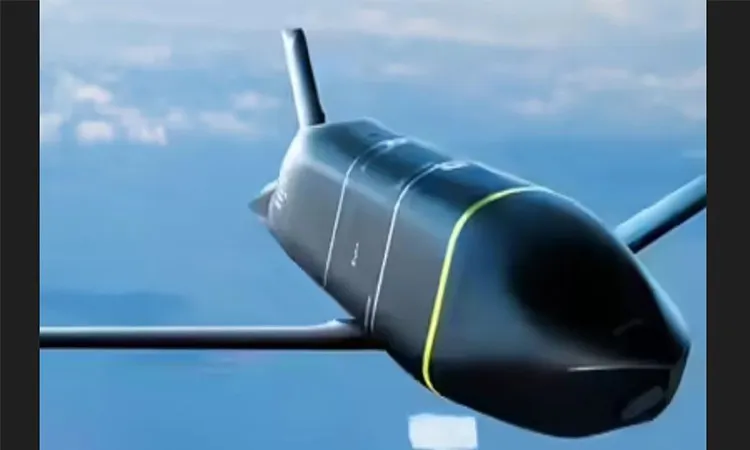
The United States has reportedly committed nearly its entire stockpile of sophisticated JASSM-ER cruise missiles to ongoing military operations against Iran. To sustain the offensive, munitions are being diverted from reserves originally held for other regional contingencies, including the Pacific Command.
Before the conflict, the US maintained an inventory of 2,300 JASSM-ER missiles. Data suggests that over 1,000 have been launched in the past four weeks alone. If current trends continue, the global US stockpile could drop to just 425 missiles—an amount military experts say would only suffice for a single mission involving 17 B-1B bombers. Rebuilding this inventory is expected to take several years under current production capacities.
While the White House asserts that much of Iran's air defense has been neutralized, recent losses suggest a more complex reality. Following the downing of a US F-15E fighter last Friday, Iranian fire damaged an A-10 attack jet and two rescue helicopters. Furthermore, over 12 MQ-9 Reaper drones have been lost since the start of hostilities, prompting internal debates regarding US air dominance.
President Donald Trump recently intensified the rhetoric, warning that the US would "send them to the Stone Age" within weeks. Amid rumors of a planned Marine operation to seize Kharg Island, Iran's primary oil terminal, the military is shifting tactics. Due to the shortage of precision cruise missiles, the US is increasingly relying on B-52 bombers to deploy more cost-effective JDAM (Joint Direct Attack Munition) gravity bombs.
Iran has maintained a high-intensity response, reportedly launching 1,600 ballistic missiles and over 4,000 Shahed drones. This volume is straining US missile defense systems, as the consumption of interceptors outpaces the manufacturing speed of defense contractors like Lockheed Martin and RTX Corporation.