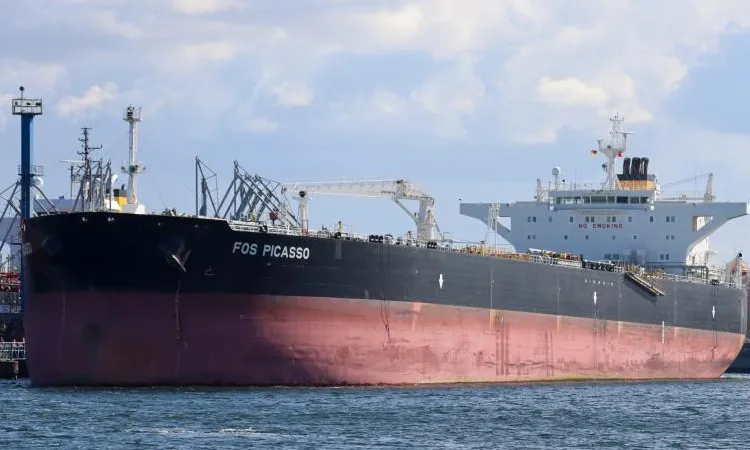
The Panama-flagged oil tanker 'MT Fossil' has successfully anchored at the outer anchorage of Chattogram Port, carrying 100,000 tonnes of crude oil from Fujairah Port in the United Arab Emirates.
This marks the second major crude shipment to reach Bangladesh since the recent escalation of conflict in the Middle East severely disrupted global maritime supply chains.
Md. Mostafizer Rahman, General Manager (Operation and Planning) of Eastern Refinery Limited (ERL), confirmed that the 248.96-meter-long vessel arrived early Friday (May 22). Following standard customs and survey clearances, the crude will be lightered—transferred via smaller tanker ships—to the state-owned ERL facility in Patenga.
The arrival provides crucial stability to the country's energy sector. ERL, the sole state-owned refinery under the Bangladesh Petroleum Corporation (BPC), was forced to temporarily shut down its crude distillation unit on April 12 after its raw material stock depleted. The crisis stemmed from the virtual closure of the Strait of Hormuz, which left another BPC-chartered vessel, the 'Nordics Pollux', stranded in eastern Saudi Arabia.
To avert a domestic fuel crisis, the government quickly secured alternative shipments. The refinery resumed operations after the first alternative cargo, carried by the 'MT Ninemia', arrived from the Red Sea coast on May 6. Officials confirmed that a third shipment of 100,000 tonnes is already scheduled to load at Saudi Arabia's Yanbu Port on May 30.
Simultaneously, regular arrivals of refined diesel and octane from Singapore and Malaysia have kept domestic fuel supplies stable.
ERL refines approximately 1.5 million tonnes of crude oil annually, meeting about 20 percent of Bangladesh's 7.2 million-tonne annual demand. The remainder is met through imported refined products and local condensate processing.
Diesel continues to dominate the nation's fuel consumption, followed by furnace oil, petrol, octane, kerosene and aviation jet fuel.