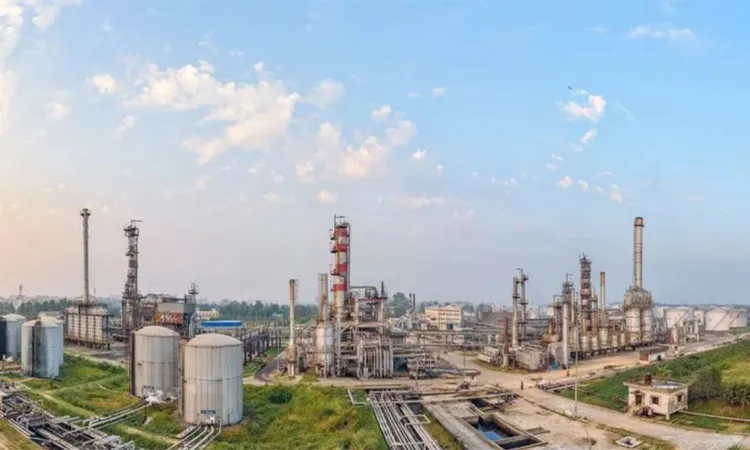
The country’s only state-owned refinery, Eastern Refinery Limited (ERL) in Patenga, Chattogram, has remained largely inactive for 19 days, leaving around 100,000 tons of crude oil unrefined.
To meet demand, Bangladesh Petroleum Corporation (BPC) has been forced to import equivalent volumes of refined fuel from local and international sources. This has increased costs and raised concerns about the country’s energy security and reliance on imports.
BPC officials earlier said three consignments totaling about 300,000 tons of crude oil were scheduled for ERL. However, delays caused by tensions in the Middle East disrupted shipments, forcing the refinery to suspend operations on April 14.
ERL Deputy General Manager Mamunur Rashid Khan said a vessel carrying 100,000 metric tons of crude oil from Saudi Arabia is expected to reach Chattogram Port on May 5. Refining operations are likely to resume fully from May 7, with preparations underway to begin lightering upon arrival.
The refinery typically processes 4,000–4,500 metric tons of crude daily, producing fuels such as diesel, petrol, kerosene, furnace oil, and LPG. Diesel accounts for about 45% of total output.
The last crude shipment arrived on February 18. Supply disruptions in the following weeks reduced refining capacity in March, and operations eventually stopped when reserves were exhausted.
Another ERL official, Mostafizur Rahman, said three crude shipments are now in transit. Alongside the Saudi consignment, a delayed shipment near the Strait of Hormuz is expected by mid-May, while another cargo from Abu Dhabi is likely to arrive in the last week of May.
Bangladesh’s sole refinery, built about six decades ago, has an annual capacity of around 1.5 million tons, compared to national demand exceeding 7 million tons. As a result, nearly 80% of the country’s fuel needs are met through imports.
Energy experts say this heavy reliance on imported refined fuel exposes the country to supply disruptions and price volatility, underscoring the need to strengthen domestic refining capacity.