U.S. President Donald Trump has warned Iran to reach a deal on its nuclear programme within 10 to 15 days or face what he called “really bad things,” escalating tensions amid a major U.S. military buildup in the Middle East.
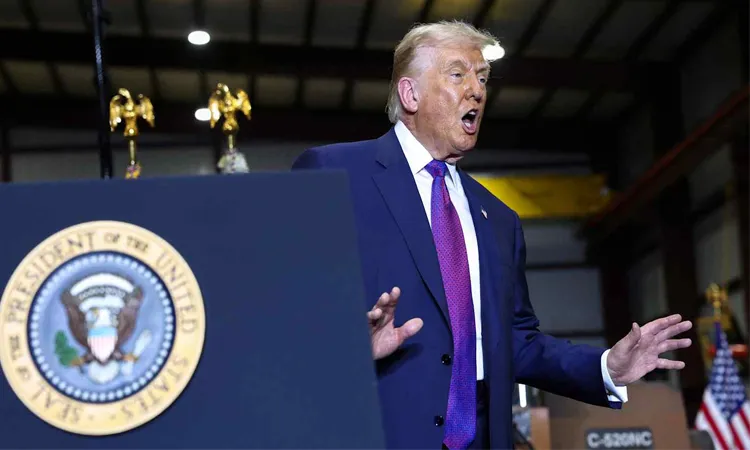
Speaking at the first meeting of his newly formed Board of Peace in Washington, Trump said talks with Iran were progressing but insisted any agreement must be “meaningful.” He repeated threats of military action, saying Iran’s nuclear capability had been “decimated” by U.S. airstrikes carried out in June, but added that further steps remained possible.
“You’ll be finding out over the next 10 days, maybe 15 at most,” Trump later told reporters aboard Air Force One, without giving further details.
Iran responded sharply. In a letter to UN Secretary-General Antonio Guterres, Tehran said it would not start a war but would defend itself if attacked. The letter warned that U.S. bases and assets across the region would be considered “legitimate targets” in the event of military aggression.
Despite the exchange of threats, Trump said “good talks are being had,” and a senior U.S. official confirmed that Iran was expected to submit a written proposal addressing American concerns. Trump urged Tehran to choose what he called a “path to peace.”
The standoff has unsettled global markets. Trump’s renewed warnings have pushed oil prices higher, while a Russian corvette has joined Iranian naval drills in the Gulf of Oman, a key route for global energy shipments.

Iranian and U.S. negotiators met earlier this week. Iranian Foreign Minister Abbas Araqchi said both sides agreed on “guiding principles,” though White House press secretary Karoline Leavitt said major differences remained.
Trump reiterated that Iran must not acquire nuclear weapons, saying peace in the Middle East would be impossible otherwise. Iran maintains its nuclear programme is for peaceful purposes, a claim disputed by the United States and Israel.
The latest escalation comes as Trump presents himself as a global peacemaker through his Board of Peace initiative, launched last year. Some Western allies have distanced themselves from the body after its scope expanded to address conflicts worldwide.
Russia has warned against what it called an “unprecedented escalation” and urged restraint. Meanwhile, the U.S. has deployed aircraft carriers, warships, and fighter jets to the region, raising fears of further strikes.
Last June, the United States and Israel bombed Iranian nuclear and military sites. U.S. Secretary of State Marco Rubio is scheduled to meet Israeli Prime Minister Benjamin Netanyahu on February 28 to discuss Iran.
Washington wants Iran to halt uranium enrichment entirely and curb its missile programme and regional influence. Iran has rejected talks beyond its nuclear file, calling limits on its missile capability a red line.
Satellite images show Iran repairing and reinforcing nuclear and missile facilities, while U.S. bases across the Middle East have stepped up preparations. Iran has also conducted joint naval drills with Russia in recent days.
As tensions rise, Poland has urged its citizens to leave Iran. Prime Minister Donald Tusk warned that evacuation windows could be very short.
Trump renewed threats of strikes in January following Iran’s violent crackdown on nationwide protests that reportedly left thousands dead.