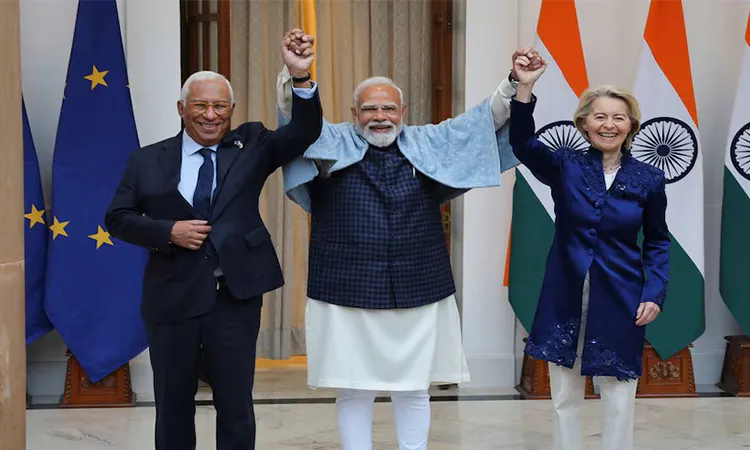
India and the European Union have reached a historic agreement that marks a significant shift in the global economic landscape. After two decades of negotiations, the deal aims to dramatically increase bilateral trade, reduce dependency on the U.S. market, and eliminate barriers for nearly 97% of traded goods.
The deal is projected to double EU exports to India by 2032, offering massive duty savings for European firms. In exchange, India secures zero-tariff access to European markets for its most competitive sectors.
The EU will eliminate tariffs on 99.5% of Indian imports over seven years. Major beneficiaries include the textile, leather, chemical, gem and jewelry, and marine product industries.
India will open its "highly guarded" market, significantly lowering duties on machinery, electrical equipment, and steel.
India will slash car tariffs from as high as 110% down to 10% over five years for specific quotas, providing a massive boost to brands like BMW, Mercedes-Benz, and Volkswagen.
Immediate relief for European exporters as India cuts wine duties from 150% to 75% (eventually dropping to 20%) and spirits to 40%.
The deal comes amid rising global trade tensions and a push by "middle powers" to diversify partnerships. Notably, sensitive agricultural items—including rice, sugar, dairy, beef, and soya—have been excluded to protect local farmers on both sides.