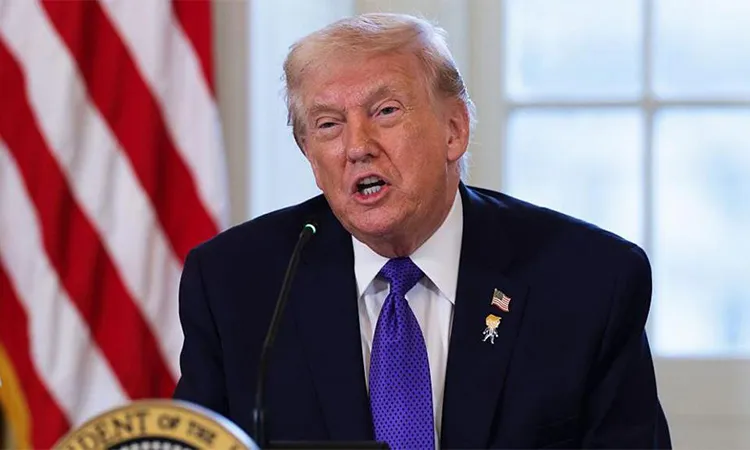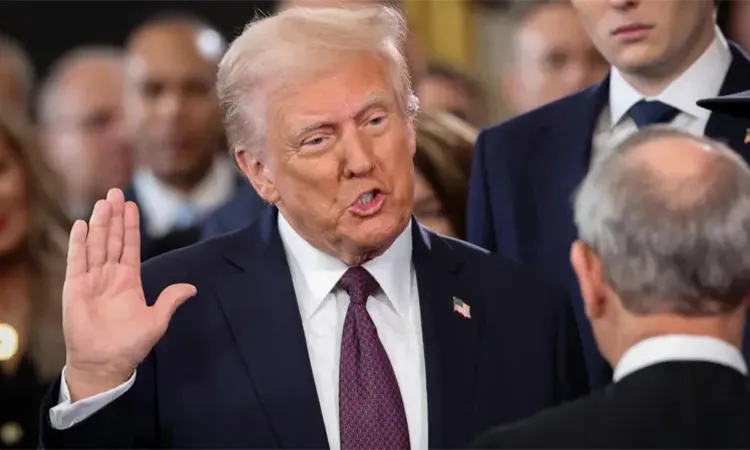
U.S. President Donald Trump has linked his administration’s aggressive push to acquire Greenland to his failure to win the Nobel Peace Prize. The escalating row now threatens to ignite a massive trade war between the United States and Europe.
In a series of text messages released by the Norwegian government on Monday, Trump told Norway’s Prime Minister Jonas Gahr Stoere that because he was not awarded the 2025 Nobel Peace Prize, he no longer feels an "obligation to think purely of peace" and will instead prioritize U.S. strategic interests.

Tariff Threats and EU Response President Trump confirmed he is "100%" prepared to impose sweeping tariffs on European nations—including Denmark, Germany, France, and Britain—starting February 1, unless a deal for Greenland is reached. When asked by NBC News if he would consider military force to seize the island, the President responded, “No comment.” The European Union is already preparing a counter-strike. EU leaders are set to meet in Brussels this Thursday to discuss a 93-billion-euro ($108 billion) tariff package on U.S. imports. They are also considering the "Anti-Coercion Instrument" (ACI), a powerful tool that could restrict U.S. banking and digital services across the bloc.
"You Don't Trade People" Denmark and Greenland have remained firm in their rejection of the U.S. proposal. "We are living in 2026; you can trade with people, but you don't trade people," said Danish Foreign Minister Lars Lokke Rasmussen. Greenland’s Prime Minister Jens-Frederik Nielsen added that the territory, home to 57,000 people, will not be pressured into abandoning its sovereignty.
Global Markets on Edge The dispute comes at a fragile time for the NATO alliance. While U.S. Treasury Secretary Scott Bessent dismissed the Nobel Prize link as a "canard," insisting the move is purely strategic, European leaders remain rattled.
German Chancellor Friedrich Merz stated that while Europe does not want a trade war, it is fully capable of responding to "unreasonable" tariffs. Global financial markets have already shown signs of volatility as the February 1 deadline approaches.