


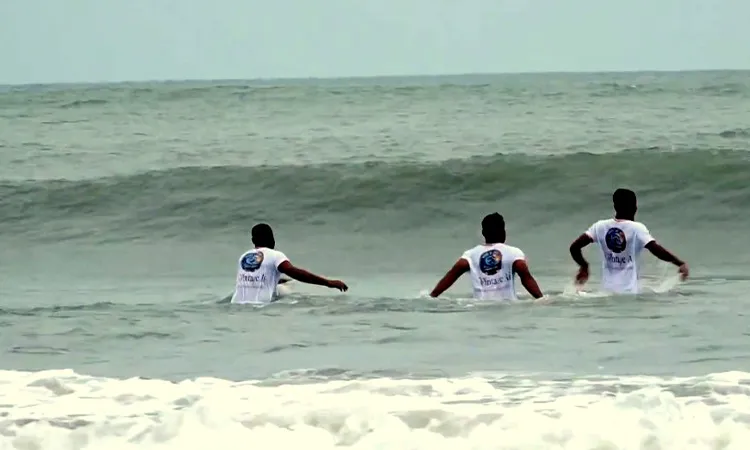
A new adventure sport is gaining popularity on the beaches of Cox’s Bazar. Known as “body surfing,” the activity allows surfers to ride sea waves using only body balance and technique, without boards or boats.
The centuries-old water sport has now officially started in Bangladesh at Cox’s Bazar, the world’s longest sea beach. Local youths are using the powerful waves of the Bay of Bengal to create a new identity for adventure tourism and water sports in the country.
Body surfing has already become an attraction for tourists visiting the beach. Floating through foamy waves using only physical skills offers both excitement and a deeper understanding of sea safety.
The official journey of body surfing in Cox’s Bazar began last Sunday morning at Laboni Point with the participation of around 30 trained surfers.
Training sessions are now being held daily from 9:00am to 10:00am at Laboni Point and nearby beaches. Local residents and tourists can join the sessions free of charge.
Joynal Abedin, founder of Bangladesh Body Surfing, said the sport originated in the Hawaiian Islands more than 300 years ago. According to him, people were inspired by the movement of dolphins returning to shore through the waves.
He said body surfing later became the foundation for many modern surfing styles practiced around the world.
“Surfing is already part of the Olympic Games. We also dream of producing skilled Bangladeshi body surfers who can compete internationally,” he said.
Tourism stakeholders believe Cox’s Bazar has strong potential to become an international destination for body surfing. They say the sport can promote sea awareness, reduce fear of the ocean, and encourage safer beach activities.
At Kalatali Beach, trainers are teaching participants swimming techniques, wave control, physical fitness and basic lifesaving skills. One notable feature of the program is the growing participation of women.
Unlike traditional surfing, body surfing requires no expensive equipment such as boards or wetsuits. Participants mainly need courage, technique and swimming ability. This low-cost nature is helping the sport spread quickly among local youths and visitors.
Experts say the best season for body surfing in Cox’s Bazar is from June to August, when strong monsoon waves hit the Bay of Bengal. September and October are also suitable because of moderate wave conditions.
Laboni, Kalatali and Sugandha beaches have been identified as ideal locations for the sport. Kalatali Beach is considered more suitable for experienced surfers because of its stronger waves, while Laboni and Sugandha are better for beginners.
Tourism officials say social media videos and photos have increased interest among the younger generation. Crowds now gather on the beach every afternoon to watch surfers ride the waves.
Md. Osman Gani, another founder of Bangladesh Body Surfing, said many tourists face danger in the sea because they do not understand tides and wave patterns.
“Body surfing teaches people how to use waves to return safely to shore. It can also help reduce drowning incidents,” he said.
Local surfer Selim said he has been practicing surfing since 2012 and working as a lifeguard since 2014.
“We practiced body surfing informally for years. Now it has started officially. It can contribute to both tourism and sea safety,” he said.
According to organizers, plans are underway to arrange national body surfing competitions in Cox’s Bazar with sponsorship support.
Adviser to Bangladesh Body Surfing Imtiaz Ahmed said the 120-kilometre beach offers huge opportunities for water-based adventure sports.
“Cox’s Bazar can become an international hub not only for surfing, but also for body surfing and other marine sports,” he said.

