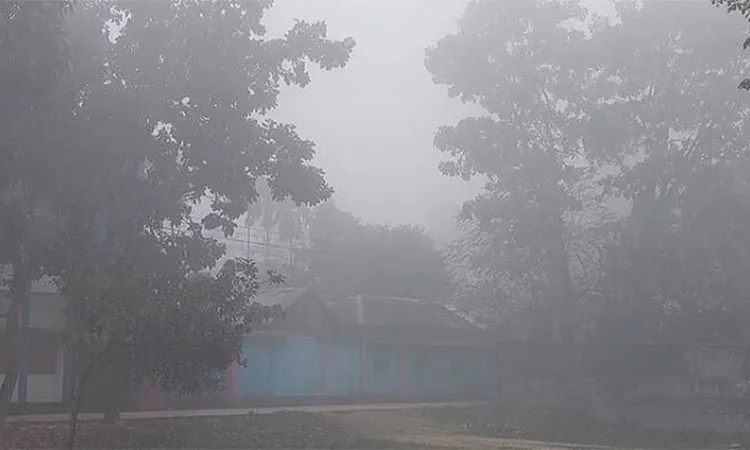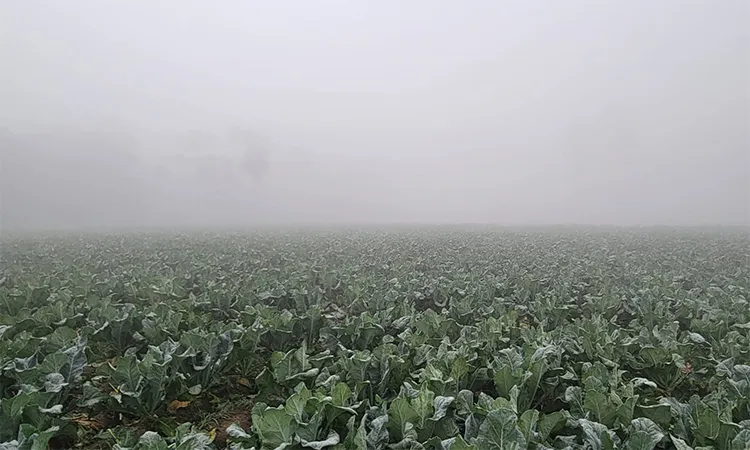
The northern district of Kurigram is reeling under a severe onset of winter, with the sun remaining invisible for four consecutive days. The Rajarhat Meteorological Observatory recorded the district's minimum temperature at 11.2°C on Saturday morning, marking a steady decline in mercury accompanied by biting icy winds.
The persistent fog and extreme cold have brought normal life to a standstill. Low Visibility of Vehicles, including buses and trucks, are forced to move slowly with headlights on during the day. Water vessels are also struggling to maintain schedules.

Hard-working laborers and agricultural workers are unable to find consistent work, leaving low-income families in financial distress.

In the absence of adequate warm clothing, many residents are seen burning straw to keep warm, while farmers are using burlap sacks to protect their livestock. The severe weather has triggered a surge in cold-related illnesses. Civil Surgeon Dr. Swapan Kumar Biswas reported an increase in patients suffering from fever, cough, and pneumonia across nine upazila health complexes. Children and the elderly remain the most vulnerable groups during this period.
The Department of Agricultural Extension has warned that if temperatures fall below 10°C, Boro seedbeds could face significant damage. Officials are actively advising farmers on protective measures to save their crops from the frost.
Deputy Commissioner Annapurna Debnath confirmed that the administration has begun the first phase of relief, distributing 22,000 blankets across the district. However, the situation may worsen, as Meteorologist Subal Chandra Sarkar predicts a formal cold wave may sweep through the region by the end of December.