- National
- Bangladesh
- Business
- International
- Sports
- Entertainment
- Politics
- Technology
- Life Style
- Religion
- Opinion
Sunday, 31 May 2026

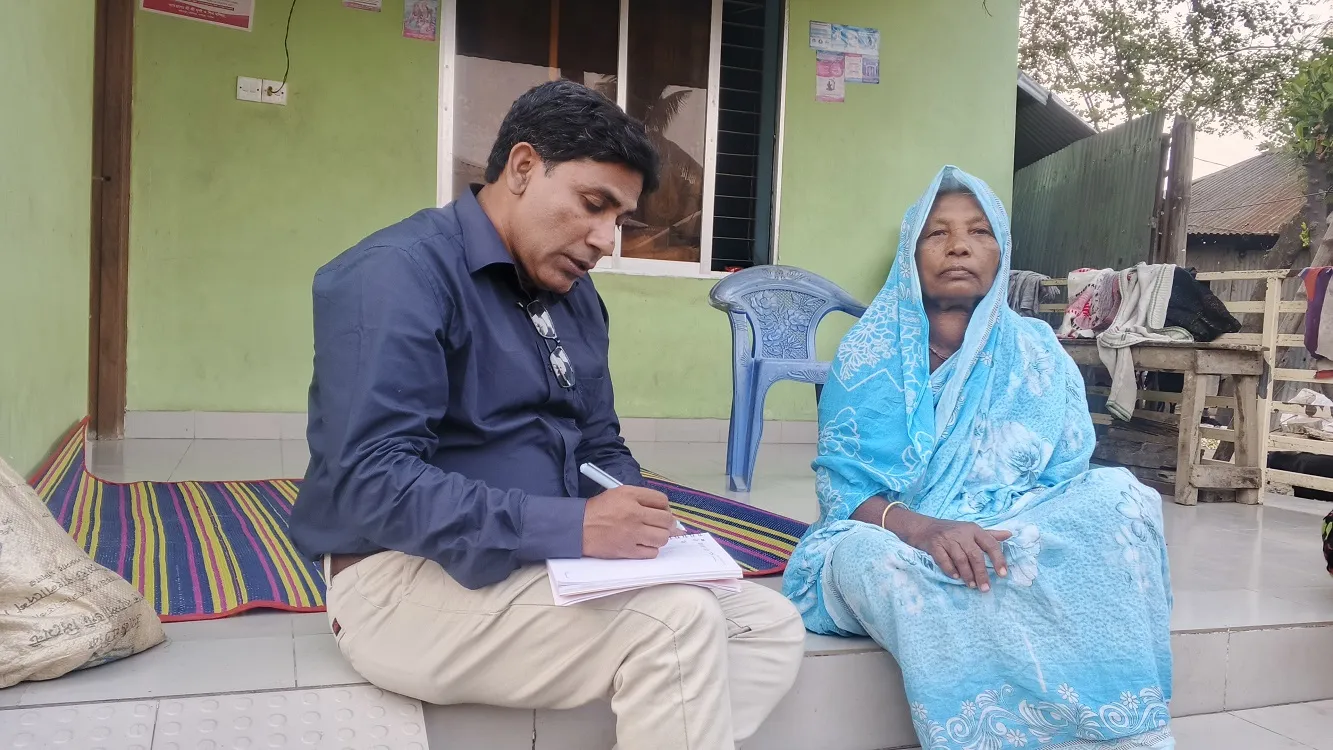
The morning sun remained intense. As I walked along the narrow path of Guchchagram in Khadiripur Bagdipara of Atghariya, a woman's piercing voice resonated. She spoke with great volume, her eyes and face radiating anger and fervor in her beliefs. Driven by a strong desire for justice, each of her words flowed like a tempest of events.
Shupriya states, “Government assistance fails to reach us as tribal members. It directly lands in the hands of the victims through the party. However, when a third party intervenes, corrupt influences also emerge.”
To him, not his own community, not politicians, nor middlemen and powerful figures in the administration—everyone appears equally culpable. I had to spend limited time in the library for my studies. Yet today, I am not a public leader, speaking with a quiver in meetings and seminars.

Marmi Village Afternoon: A Young Woman's Dream That Has Come to a Halt In Marmi Village, I noticed my beloved Prema Vasvasar walking by the Daghiri. She was filling a sack with rice, shielded from the sun. In between, she wiped the sweat from her brow. Although Prema is still young, the weariness etched on her face narrates a tale of heightened responsibilities, poverty, and shattered dreams.
I have been pursuing my studies for a long time, aspiring to join the Sanovanhi, but my HS results have declined - the exams have not gone well either. Nevertheless, Prema braved the sweltering sun and remarked, “There are 300 people here. There is no school. The children cannot learn. The teachers never come for us.” Nearby stands the rundown structure of the children's education center. It has remained closed for five to six years. Upon closer inspection, one can observe vacant rooms, limescale creeping up the walls, and dust gathering in the corners—each element narrates a tale of solitude, where the silence of unfulfilled dreams lingers.

The conflicts that have built up in the stream Adjacent to the 33-acre river, the water flows, yet beneath its surface lie years of conflicts, factions, and legal disputes. Once, the property belonging to Rani Bhabani was taken unlawfully. Subsequently, tensions between two communities over ownership intensified. The legal battle dragged on until a verdict favored the temple committee. Now, with the participation of Christian tribals, fish farming is taking place in the river—a glimmer of hope has emerged amidst the historical strife.

The tale of a couple who served as educators in a school Agnishe Basvis sat quietly in a corner of her home. Her husband, Dominic Basvis, passed away after dedicating 19 years to teaching. Agnishe, much like Najir, took on the responsibility of the school. For 13 years, she passed the pen to her students. The school was shuttered following the project's conclusion in 2019. He sighed and remarked, “There are 85 joint families divided into four groups here. Yet, our deepest wound—the future of the students is being halted.” A glance into his eyes reveals that it is not merely the school at stake—the potential of an entire generation is at risk.

Strolling through the streets of Abhalo The unpaved two-kilometer stretch from Kalkipur Bazar to Marmi Palli can be quite challenging. Walking in the rain diminishes your confidence. At the government school, students are required to wear mud as much as possible each day. An elderly community member remarked, “I’m uncertain if the road will ever be constructed. Apply, take a photo, come—Oh dear, year after year, only hope arrives, yet the road remains unfinished.”
Heroines Sona Bala and Maya Rani—The Day of Rising from Darkness to Light A bit further into the village of Guchcha, two women nearing 70—Sona Bala and Maya Rani—can be seen. With braids in their hair, they walk slowly, but their eyes shine with brightness.
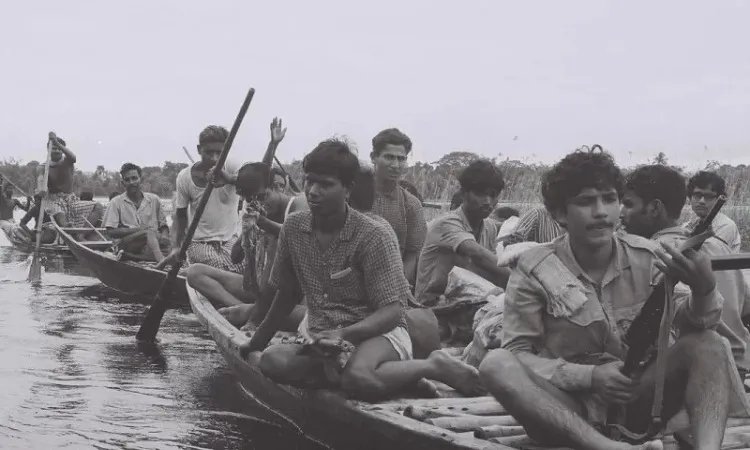
The memory of the night of October 22, 1971, still causes their voices to quiver. After enduring torture at the hands of the Razakars, they were compelled to live among the streets of the local populace. However, following independence, they faced 45 years of poverty and humiliation.
At last, in 2017, they were acknowledged as freedom fighters. They are ascending to the heights of heroism, now receiving a pension—like a gentle breeze in their twilight years.
Maya Rani expresses, “I will receive respect at the end of my life. Our descendants will also be able to proclaim that we are the descendants of freedom fighters.”
Sona Bala smiles and adds, “Before I pass away, I have demonstrated to the world that we did not err by toiling hard.
We need to secure a place to live—a piece of land. 75-year-old Vashnupada Sutradhar states, “There was space for 42 houses, but now 80 houses are occupied. Where will I find a place?” Anita Rani’s situation is even more challenging—there is no private land available, and we are forced to reside in a corner of another house belonging to our in-laws. Dilpi Chandra faces a similar issue—there is no access road to the crematorium. “We have to purchase land from others. It is a constant struggle.”

The village's fishpond is as small as a house, yet fish farming serves as its primary source of income. After 52 years of farming, they catch fish and earn between 3 to 3.5 lakh taka each month. However, this income merely provides a subsistence level—not a sustainable livelihood. Children are not attending school, there are no job opportunities, and healthcare is lacking—resulting in an unending cycle of poverty.
Ashki Chandra Banayachar, President of the Pabna Jolo Branch of the National Tribal Council, remarked, “At present, the tribal community is encountering numerous challenges. A faction is forming fake groups to encroach upon their lands. Since August 5, government funding for education and housing development has been halted. A significant project has also been put on hold in the Ministry of Water Resources.
The six sub-districts of Pabna Jolo—Pabna Sadar, Ishwardi, Atgharoya, Chatmohar, Bhangura, and Sujanagar—are predominantly populated by tribal communities. Although there are some families in Santhiya, they are reluctant to come forward and claim their tribal identity.”
There are accusations that he is not a tribal member but is engaged in nepotism and corruption. In response, he stated, “Two factions have emerged among the tribals. One operates under the name ‘Tribal Cooperative Society’ in the Upazila, while the other conducts programs under the National Tribal Council’s banner from the Upazila. They are disseminating false information about me because I have opposed certain activities in the Upazila. In fact, they are the ones exploiting government resources. Final scene: Can you perceive the light when the fog dissipates? The narrative of the tribal villages in Pabna is not merely one of hardship—it is a tale of a silent struggle for everyday existence. Women like Shapriya advocate against injustice, young women such as Prema cling to their aspirations, educators like Agnesh Basvasar dedicate themselves to nurturing a future generation, and women like Sona Bala and Maya Rani demonstrate that respect is the ultimate strength of an individual.
Yet, the question persists—how will children attend school without proper roads? Where will this generation find its place without educational institutions? And without opportunities, can the tribal community genuinely progress in the future?
The light from the women's bar shines brilliantly. The dust-covered smile on the faces of the children in the light conveys—there is still hope.