After nearly two decades in exile, Tarique Rahman, the acting Chairman of the Bangladesh Nationalist Party (BNP), has returned to Dhaka to reclaim his position in the country’s volatile political landscape.
Positioned as a bridge between the "old guard" and the youth revolutionaries who ousted Sheikh Hasina, Rahman’s return is marked by the recent death of his mother, former Prime Minister Khaleda Zia, and a series of quashed legal convictions.
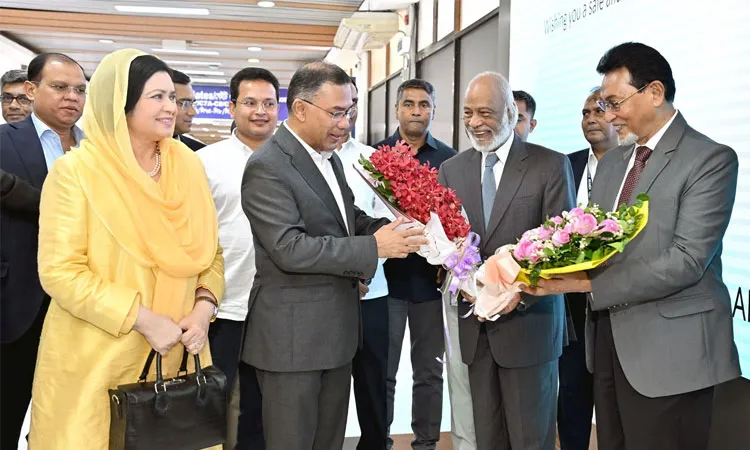
Tarique arrived in Bangladesh on December 25, 2025, greeted by massive crowds. However, the homecoming was soon overshadowed by the passing of his mother, Khaleda Zia, on December 30. Rahman cited her death as a catalyst for his renewed sense of duty, stating, "When you have a responsibility, you must perform it."
Rahman’s political history is complicated by a 2008 U.S. diplomatic cable that labeled him a "symbol of kleptocratic government." In his interview with TIME, Rahman denied all allegations of bribery and embezzlement, noting that the current interim government has quashed his prior convictions due to a lack of evidence. He attributes his current standing not to his lineage, but to the unwavering support of party grassroots.
Reflecting on his time in prison (2007–2008), Rahman revealed that he still suffers from spinal injuries resulting from torture. He views his chronic back pain as a physical reminder of his "responsibility toward the people" to ensure such human rights abuses do not happen again.
Addressing the 20% reciprocal tariffs recently imposed by the Trump Administration, Rahman displayed a pragmatic "policy wonk" persona. He proposed reducing the trade deficit by negotiating the purchase of Boeing aircraft and U.S. energy infrastructure, expressing confidence that he can find common ground with President Trump.
Rahman’s platform focuses on three pillars: Rule of Law: Ensuring safety for citizens and businesses. Freedom of Expression: Re-establishing a democracy where "people can speak freely." Regional Stability: Improving relations with India while prioritizing Bangladeshi interests.
Tarique Rahman now lives under heavy security in his family home—a situation he describes as "claustrophobic" compared to his former life in London. Nevertheless, he maintains that if he can implement even 30% of his planned reforms, he will secure the lasting support of the nation.
He closed the interview by echoing a famous mantra: "With great power comes great responsibility."