- National
- Bangladesh
- Business
- International
- Sports
- Entertainment
- Politics
- Technology
- Life Style
- Religion
- Opinion
Friday, 17 April 2026

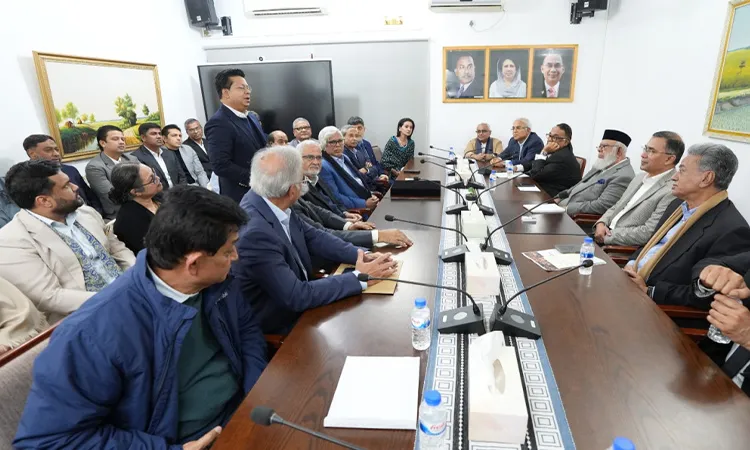
BNP Acting Chairman Tarique Rahman assured business leaders on Sunday that a BNP-led government would prioritize restoring law and order, easing the energy crisis, and lowering interest rates to foster a private sector-led economy.
During a two-and-a-half-hour meeting at the party chairperson’s Gulshan office, Rahman met with 30 representatives from various industries. While the meeting was initially intended to offer condolences following the death of BNP Chairperson Khaleda Zia, it evolved into an in-depth policy discussion.
Sector-Specific Planning Rahman emphasized that a future BNP government would move away from generic policies, instead implementing sector-specific plans developed through direct consultation with business stakeholders. He also noted his intention to hold individual meetings with different industries to address their unique challenges.
LDC Graduation Addressing concerns over Bangladesh’s graduation from the Least Developed Country (LDC) status, Rahman stated that he currently does not favor the transition. He pledged that if the BNP takes office, the party would explore opportunities to defer the graduation to protect domestic industries.
Key Business Demands Participants, including Bangladesh Chamber of Industries President Anwar-ul Alam Chowdhury Parvez, highlighted several critical hurdles currently facing the private sector: Security: Business leaders called for an end to "mob culture" and an immediate improvement in law and order. Finance: Leaders urged the party to lower bank interest rates and develop a robust capital market to reduce the private sector’s over-reliance on bank loans. Energy: Industry heads stressed that the ongoing energy crisis is crippling production and stifling new investment. Labor: The group discussed the acute shortage of skilled workers, proposing more professional university courses to align education with industry needs.
Rahman told the delegation he had studied these industrial challenges extensively during his time in London and reiterated that policy-making under his leadership would be an inclusive process.
Comment