The Executive Committee of the National Economic Council (ECNEC) has given final approval to the Padma Barrage project, with an estimated cost of Tk 33,474.45 crore.
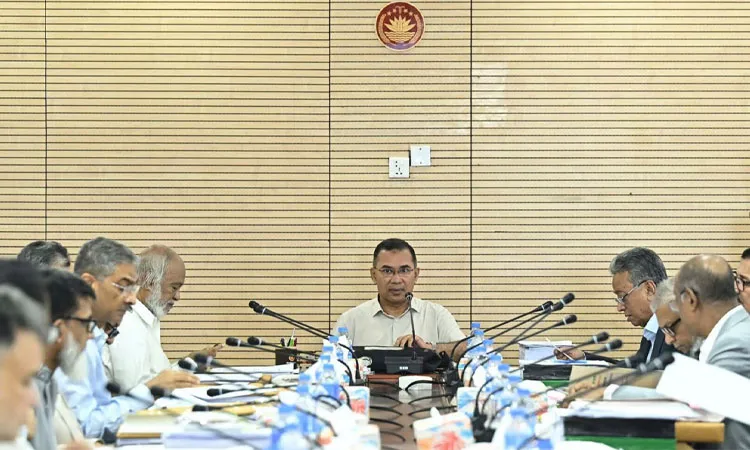
The approval came at the ECNEC meeting held at the Secretariat on Wednesday (May 13) under the chairmanship of Prime Minister Tarique Rahman.
A total of 16 projects were placed before the meeting, with the Padma Barrage listed as agenda item 11. The project had previously been discussed at several ECNEC meetings but was not approved during the interim government period.
Officials said the project aims to conserve and regulate Padma River water during the dry season to restore freshwater flow in affected regions. Implementation is scheduled from July 2026 to June 2033.
According to officials present at the meeting, the project received final clearance after years of review.
Experts and officials concerned believe the project could directly benefit around 37 percent of the country’s population. They say it may reduce salinity, revive dead rivers and improve agriculture, fisheries and the environment in southwestern and northwestern Bangladesh.
The water crisis in the region worsened after India built the Farakka Barrage in West Bengal in 1975 to divert water from the Ganges into the Bhagirathi-Hooghly River for Kolkata Port navigation. Since then, dry-season water flow in Bangladesh’s Padma River has declined sharply, affecting rivers including the Gorai-Madhumati, Mathabhanga, Ichamati and Baral.
The Ministry of Water Resources says the broader Padma Barrage initiative could eventually cost Tk 50,443 crore. The main goal is to ensure freshwater flow to river systems in southwestern and northwestern Bangladesh during the dry season.
However, experts say the project still faces uncertainty due to regional water-sharing issues linked to the Farakka Barrage. The 1996 Ganges Water Sharing Treaty between Bangladesh and India is set to expire in December this year.
Relevant sources say reduced dry-season flow in the Padma has increased salinity in rivers and canals across southwestern Bangladesh, negatively affecting agriculture, fisheries, navigation, freshwater availability and the biodiversity of the Sundarbans.