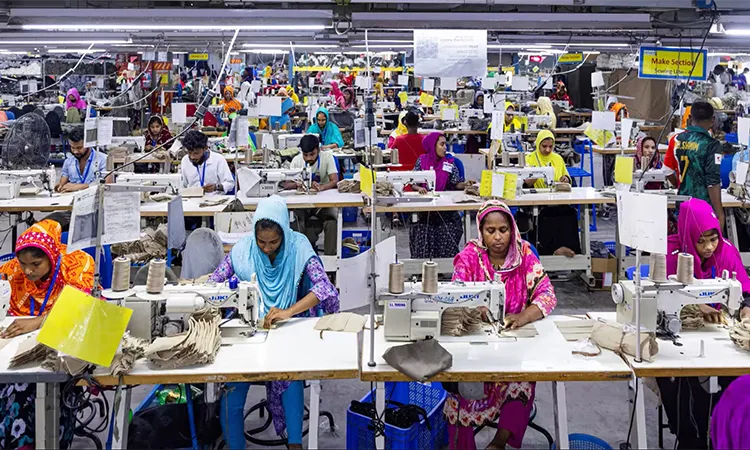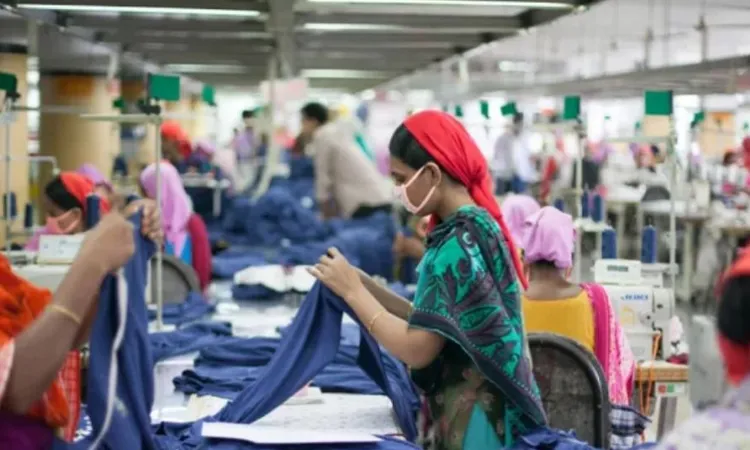
Bangladesh has become the second-largest exporter of ready-made garments (RMG) to the United States, despite a decline in overall exports during the first quarter of the year.
The rise in ranking comes mainly due to a sharp fall in China’s garment exports to the US market following higher US counter-tariffs on Chinese products. Vietnam remains the top garment exporter to the United States.
According to the latest data from the Office of Textiles and Apparel (OTEXA), Bangladesh exported garments worth $2.04 billion to the US between January and March this year. However, exports fell by 8.38 percent compared with the same period last year.
China’s garment exports to the US dropped by nearly 53 percent during the same period, falling to $1.7 billion from $3.61 billion a year earlier. As a result, Bangladesh moved ahead of China to secure second place.
Vietnam retained the top position by exporting garments worth $3.98 billion to the US market. Vietnam currently holds around 22 percent of the US garment import market, while Bangladesh’s share stands at about 11.5 percent.
OTEXA data also shows that the United States imported ready-made garments worth $17.73 billion in the first quarter of the year, down 11.6 percent from the same period last year.
Among the top five garment-exporting countries, only Vietnam recorded export growth. Exports from Bangladesh, China, India, and Indonesia all declined.
Indonesia’s garment exports fell slightly to $1.22 billion, while India’s exports declined by 27 percent to $1.10 billion during the January–March period.
Industry analysts say US tariff measures have triggered major changes in the global apparel market. China has faced the strongest pressure among countries affected by US trade restrictions. Bangladesh later received some competitive advantage after tariff rates on certain products were reduced under trade arrangements with the United States.
However, garment exporters warn that higher tariffs, rising fuel costs linked to tensions in the Middle East, and global inflationary pressure have reduced demand in the US market and led to fewer purchase orders.