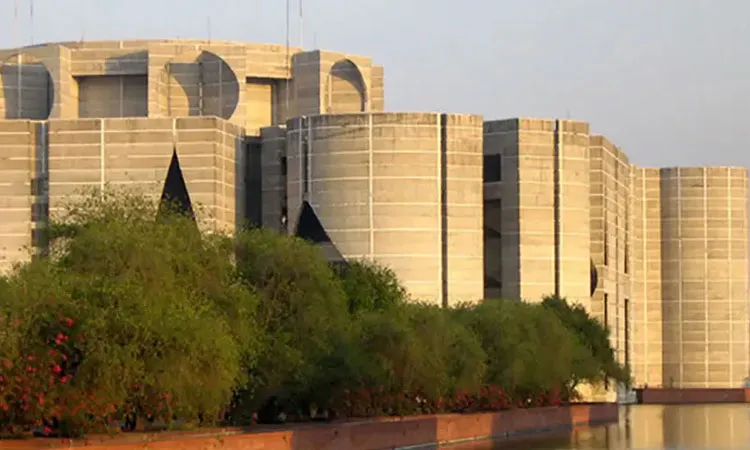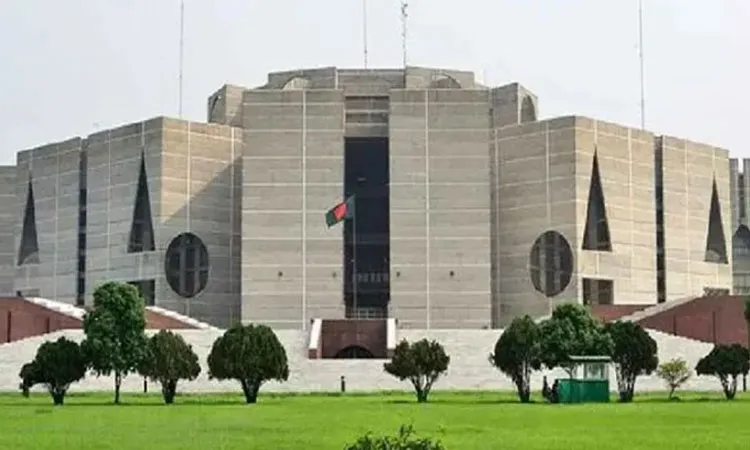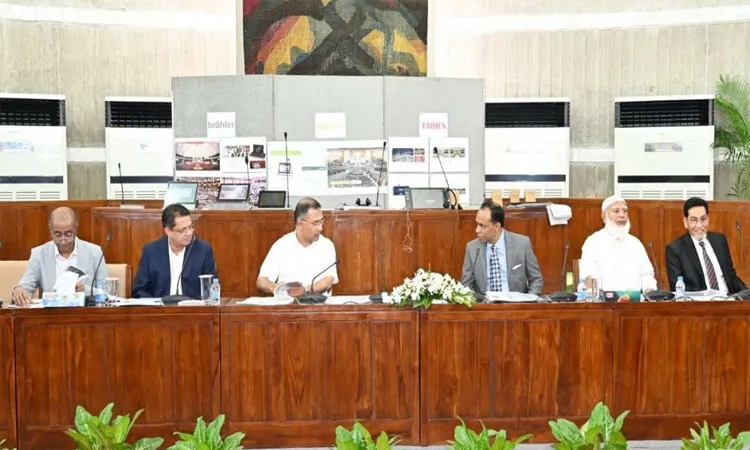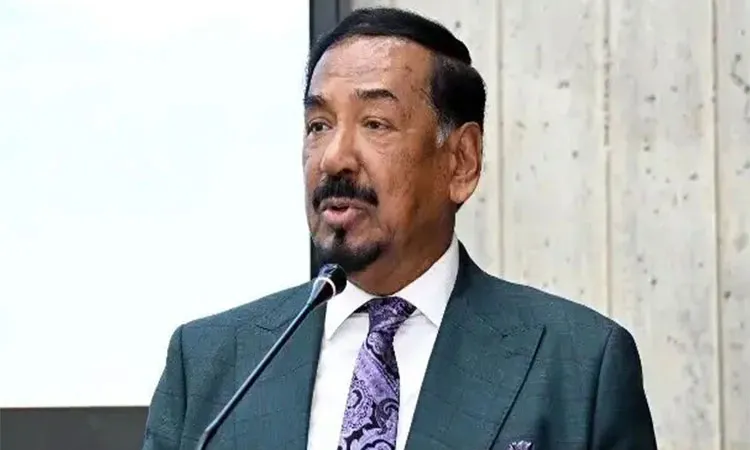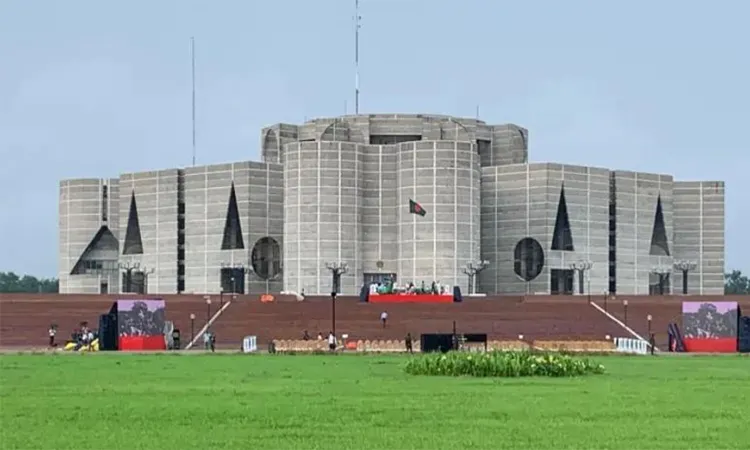
The first session of the 13th National Parliament begins today (Thursday), marking the start of a new political chapter following the change of government after the August 5 uprising.
Two major issues are expected to dominate the opening session: the implementation of the July Charter and the fate of 133 ordinances issued during the interim government led by Dr. Muhammad Yunus.
On the first day, Law, Justice and Parliamentary Affairs Minister Md. Asaduzzaman will present the ordinances in parliament.
Uncertainty over Speaker and Deputy Speaker
Despite preparations for the session, it remains unclear who will preside over the opening sitting and who will be elected Speaker and Deputy Speaker.
Both government and opposition MPs held separate parliamentary party meetings on Wednesday to finalize their strategies.
During the meeting of the ruling BNP, Parliament Leader and Prime Minister Tarique Rahman indicated that the July Charter would be implemented according to the party’s position, with a note of dissent on certain provisions.
Opposition parties — mainly Jamaat-e-Islami and National Citizen Party (NCP) — are demanding the full implementation of the charter as approved in the referendum.
Their disagreements mainly concern:
Deputy Speaker post may go to opposition
At the BNP parliamentary party meeting held at the Parliament House, the party decided to give Prime Minister Tarique Rahman authority to finalize the Speaker and Deputy Speaker nominations.
Traditionally, both posts are filled by members of the ruling party. However, BNP has proposed giving the Deputy Speaker position to the opposition Jamaat-e-Islami, reflecting a commitment made in the July Charter.
After the opposition meeting, Jamaat Ameer Shafiqur Rahman said his party wants the charter implemented as a complete package.
“We do not want partial implementation. All provisions of the July Charter should be accepted and implemented together,” he said.
Background to the new parliament
The Awami League government fell on 5 August 2024 following a mass uprising.
About a year and a half later, the 13th parliamentary election was held on 12 February under an interim government. The BNP secured a two-thirds majority.
Earlier, the President dissolved the 12th Parliament on 6 August 2024. Its final budget session had run from 5 June to 3 July, lasting 19 working days.
Under the constitution, parliament must be convened within 30 days of election results. President Md. Shahabuddin called the first session for March 12 at 11:00 am at the National Parliament Building.
The duration of the session has not yet been finalized. It will be decided after the formation of the parliamentary advisory committee.
Speaker’s chair vacant for the first time
Parliament Secretariat officials say the Speaker’s post has never been vacant at the start of a session since parliamentary democracy was restored in 1991.
Previously, even during the transition after the ninth election under the army-backed caretaker government, the new parliament began under the chairmanship of BNP-nominated Speaker Jamiruddin Sircar.
This time, however, MPs were sworn in by Chief Election Commissioner AMM Nasir Uddin, reflecting the unusual situation.
Former Speaker Shirin Sharmin Chaudhury left office after the fall of the Sheikh Hasina government, while former Deputy Speaker Shamsul Haque Tuku is currently in jail in connection with a case.
How the first sitting will proceed
According to parliamentary rules, the opening sitting will begin with a welcome speech by Parliament Leader Tarique Rahman.
He will then nominate a member of parliament to preside over the sitting. Under that member’s chairmanship, the election of the Speaker and Deputy Speaker will take place.
Chief Whip Nurul Islam Moni said the session will begin with the recitation of the Holy Quran before the presiding member is nominated.
If there is only one candidate for each post, the Speaker and Deputy Speaker will be elected by voice vote.
After the election, the session will be briefly adjourned so the President can administer the oath to the newly elected Speaker and Deputy Speaker at the parliament building. The session will then resume under the Speaker’s chairmanship.
Ordinances and committees
During the session, parliament will also form:
A special parliamentary committee will also be formed to review the 133 ordinances issued during the interim government period.
According to the Parliament Secretariat, about 76 percent of MPs in the new parliament are first-time members.
Training programs are usually arranged for new MPs with support from development partners. This year, plans are being prepared but will require approval from the newly elected Speaker.
Meanwhile, BNP, Jamaat and NCP have already arranged internal training for their MPs.
Opposition MPs have decided to boycott the President’s speech scheduled during the session.
Tensions have already emerged between the government and opposition over the oath process. Jamaat and NCP members took an additional oath as members of the Constitution Reform Council, which BNP described as unconstitutional.
Opposition MPs plan to walk out of the chamber and remain in the parliament lobby during the President’s speech.
Jamaat leader Syed Abdullah Muhammad Taher criticized President Md. Shahabuddin, calling him an ally of the previous government.
The interim government banned the political activities of Awami League following the student-led uprising, preventing the party from participating in the election.
As a result, the new parliament begins without Awami League representation. This will be the third time the party is absent from parliament, after the 1988 fourth parliament and the 1996 sixth parliament.
Two MPs yet to take oath Results in two constituencies remain unresolved.
Elections in one seat were cancelled following the death of a candidate. In addition, court orders have suspended the results of two BNP candidates:
As a result, they cannot join the first session.
Election results summary
Out of the remaining 297 seats: