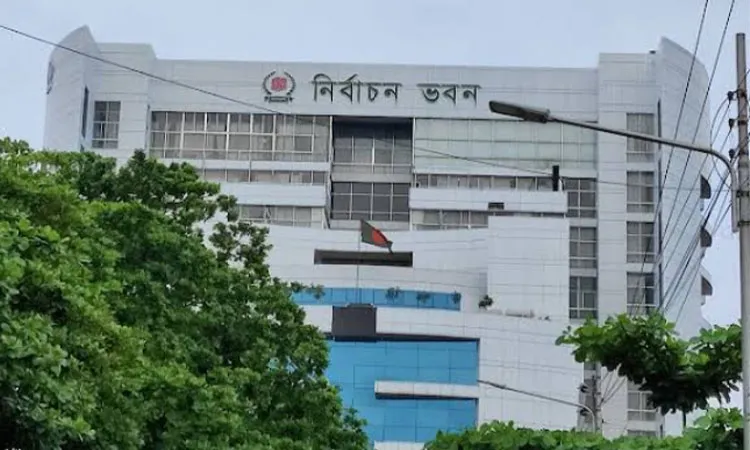
The Election Commission (EC) of Bangladesh has published the Code of Conduct for Political Parties and Candidates in Parliamentary Election Rule 2025 (gazetted on November 10, 2025), introducing several stringent and updated restrictions ahead of the national election scheduled for February 2026.
Expanded Ban on Locations: For the first time, electioneering is banned in educational institutions, government offices, and foreign lands, in addition to the standing ban in religious places of worship (mosques, temples, pagodas, churches).
Government Facilities Prohibited: No one involved in a campaign can stay in government Dak-Bungalows, rest-houses, circuit-houses, or any government office.
No Institutional Reception: Candidates are not allowed to receive any type of reception from an institution, association, or organisation.
Resignation Required: A candidate must resign from the president or member post of an educational institution's management committee before the start of the election campaign.
Campaigning Abroad Banned: Despite introducing a hybrid postal balloting system for expatriate Bangladeshis, Section 06 explicitly bars political parties or candidates from holding any public rally, street rally, meeting, or campaign in a foreign land.
Campaign Materials and Media Rules
Posters Completely Banned: The use of posters has been completely banned under any circumstances (Section 7). Billboards, banners, festoons, leaflets, and handbills are permitted.
Environmental and Size Restrictions: Materials made from non-biodegradable substances like rexine, polythene, or plastic are prohibited. Poly-coated and PVC materials are also prohibited.
Banners, leaflets, handbills, and festoons must be in black and white. Maximum Sizes: Banners (10ft x 4ft), Leaflets (8.27in x 11.69in), Festoons (18in x 24in).
Billboards: Candidates can install a maximum of 20 billboards per constituency, each not exceeding 16ft x 9ft.
Electronic and Digital Media: Campaigning through electronic and digital media is allowed, and the size restrictions do not apply to these platforms. Sound and Technology Restrictions
Microphone/Loudspeaker Limit: Candidates cannot use more than three microphones or loudspeakers simultaneously in a constituency (Section 17), aligning with the RPO. EC clarified this means three amplifiers per meeting/rally. Sound Pollution Control: Sound from microphones must not exceed 60 decibels. Loudspeakers may only be used from 2:00 PM to 8:00 PM daily.
Drones Banned: The use of any type of drone, quadcopter, or similar machine is banned during the campaign and balloting hours.
Helicopter Use: Only the president and general secretary (or equivalents) of a political party may use helicopters for campaign travel. Campaign material cannot be displayed, distributed, or dropped using the helicopter.
Social Media and AI Regulations
AI for Malicious Use Banned: Artificial Intelligence (AI) cannot be used for malicious purposes in any election-related matter, including campaigning. Prohibited Content: The code bans harmful content, including hate speech, misinformation, facial distortion, fabricated materials, inflammatory language targeting opponents, women, minorities, or any group.
Manipulation Ban: Creating, publishing, or sharing false, misleading, hateful, obscene, or defamatory content on social media (or any platform) through editing or AI manipulation is prohibited.
Submission of Social Media Info: Candidates, their agents, or parties must submit their name, account ID, email ID, and relevant social media information to the returning officer before the campaign starts.
Enforcement and Penalties
Stricter Penalties: The maximum penalty for violating the code has been significantly raised to six months’ imprisonment and a fine of Tk 150,000 (up from Tk 50,000).
Candidature Cancellation: Violation of the code can lead to the cancellation of the candidature.
Pre-Campaign Requirements: Political parties and candidates must submit a written commitment to abide by the code and accept punishment for violation. Submit their campaign plans to the authorities before the campaign begins. Electoral Dialogues: The returning officer or assistant returning officer will bring all candidates together after symbol allocation to present manifestos and pledge to follow the code. Candidates can participate in TV electoral dialogues but must avoid personal attacks.