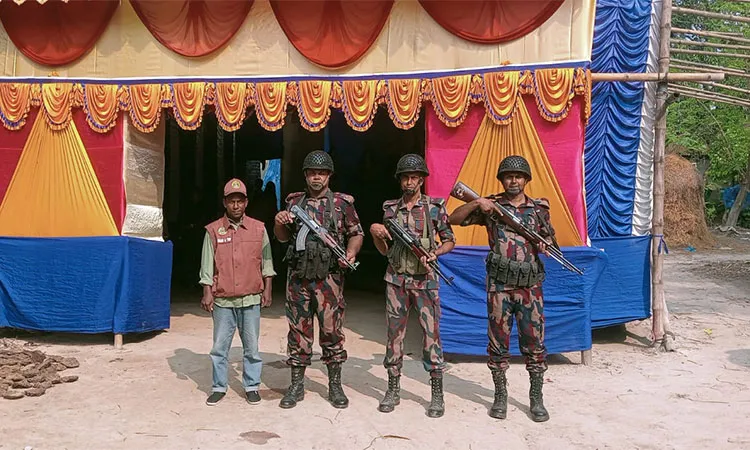
Police are dramatically increasing security in Dhaka as the city braces for a politically volatile Thursday (November 13), marked by planned protests, a possible war crimes verdict announcement, and a key national address by Chief Advisor Muhammad Yunus.
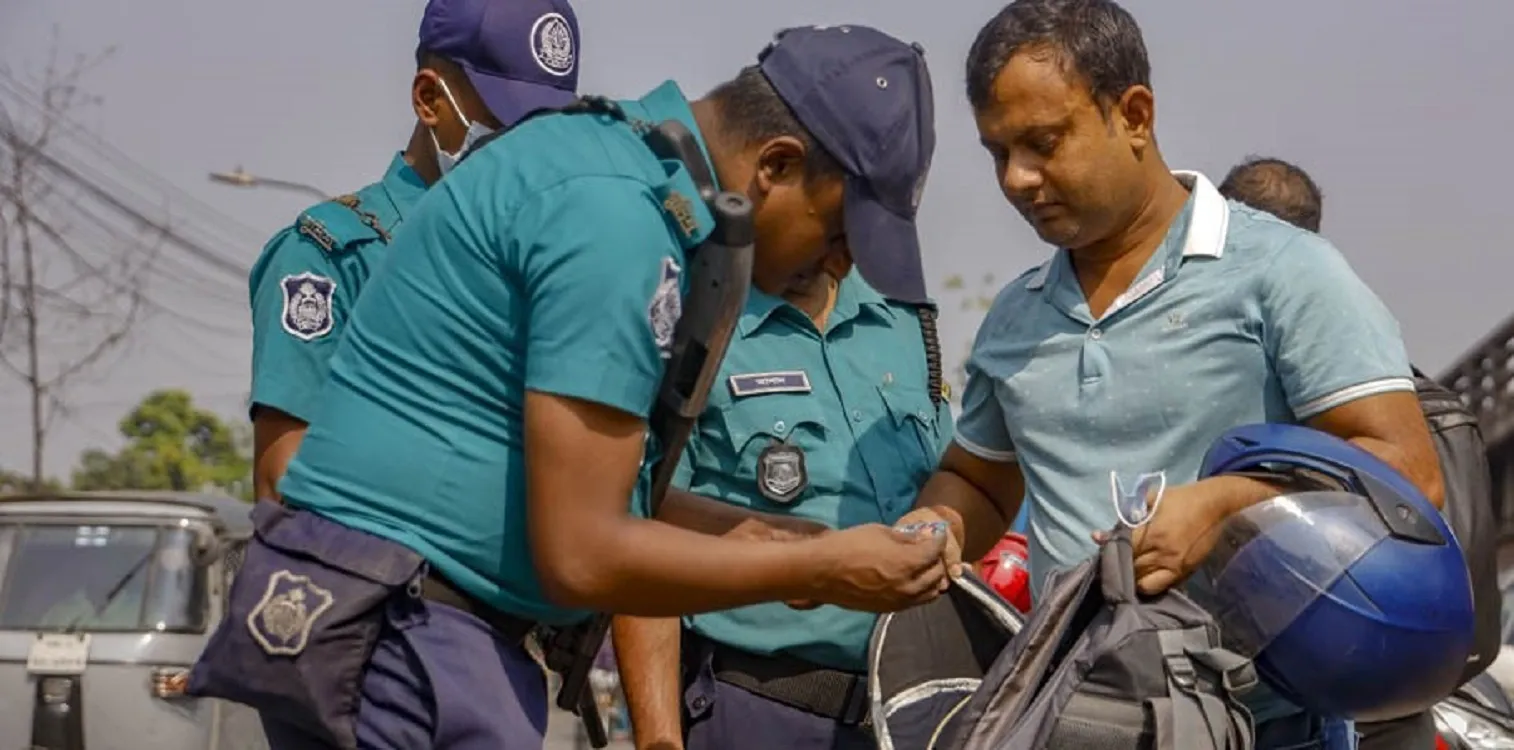
The heightened tension follows two days of sporadic violence, including vehicle arson and crude bomb blasts. The Dhaka Metropolitan Police (DMP) has significantly ramped up patrols, checkpoints (around 150 special checkpoints are operating), and raids across the city, particularly on hotels and messes, acting on intelligence that activists from the "banned" Awami League (AL) were gathering. Detectives and DMP divisions arrested numerous AL activists, whom the government accuses of orchestrating the recent arson and bomb attacks.3 One raid in Kalabagan alone led to the detention of 11 suspected individuals, with many already having prior cases on the police database (CDMS).
Police are actively verifying the identities, occupations, and reasons for travel of hotel guests, even checking phones for connections to AL networks. Special security details have been deployed around the High Court, lower courts, judges' residences, and the homes of interim government advisors. Entry routes into Dhaka are also under additional scrutiny.
Despite the visible show of force, DMP Commissioner Sheikh Md Sajjat Ali urged residents not to be alarmed, insisting police are prepared to prevent sabotage and will soon catch those responsible for the scattered crude bomb attacks.
Recent days have seen a revival of the "burn and blockade" politics, stirring public anxiety. Arson attacks were reported on a train at Tejgaon station and a bus near Dholairpar. Crude bombs exploded on the Dhaka University campus. Similar attacks occurred outside the capital, including a CNG auto-rickshaw set ablaze in Narayanganj and crude bombs being lobbed from a moving vehicle at Manikganj bus stand.
Police attributed a microbus burning in Uttara and a police van catching fire outside Ramna station to mechanical faults, not sabotage. Thursday is a confluence of major political events that are contributing to the instability: The Awami League's, barred from political activity since the August 2024 uprising, has called for a citywide "lockdown" protest, though its rank-and-file presence on the streets has been reportedly minimal so far.
The International Crimes Tribunal may announce the date for delivering the verdict in the crimes against humanity case involving former prime minister Sheikh Hasina.
Chief Advisor Muhammad Yunus is expected to deliver a national address, which many await for clarity on the timing and process of implementing the July National Charter, especially concerning the demand for a referendum before the election.
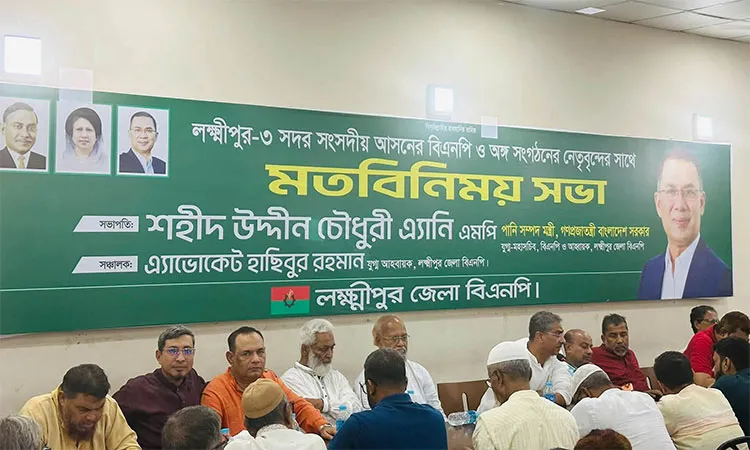
The Jamaat-e-Islami party has also vowed to mobilize on Thursday, further raising political temperatures. The rival BNP and its affiliates have staged marches and vowed to have activists "on the ground to deter sabotage" during the AL's call for a lockdown.
Despite police assurances, public anxiety remains high, impacting daily life: Many NGOs and international development agencies instructed staff to "work from home" for Thursday due to commuting safety concerns. Schools and private universities, after initially shifting online, faced pressure from the government or the University Grants Commission (UGC) to continue in-person classes, leading to mixed decisions across institutions.
Transport owners and workers plan to operate but have urged vigilance, with long-distance ticket sales sharply down. Some private drivers plan to stay off the roads entirely due to the risk of damage.
The Bangladesh Shop Owners’ Association has confirmed that all shops, business centres, and malls nationwide will open "as usual" to avoid confusion stemming from the "lockdown" calls.