- National
- Bangladesh
- Business
- International
- Sports
- Entertainment
- Politics
- Technology
- Life Style
- Religion
- Opinion
- FIFA World Cup 2026
Sunday, 16 August 2026


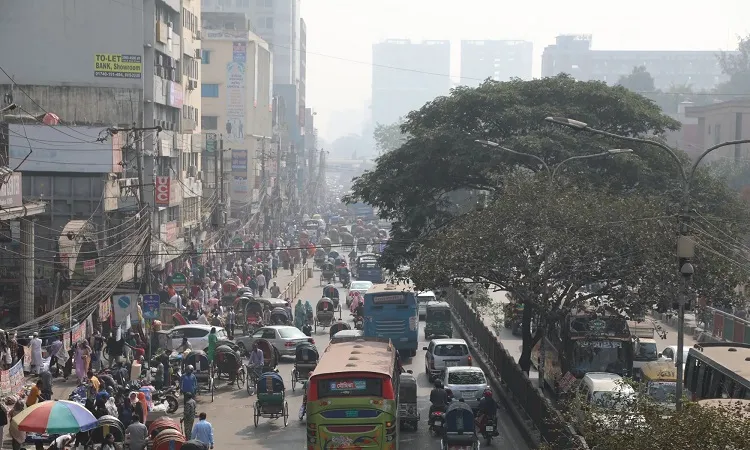
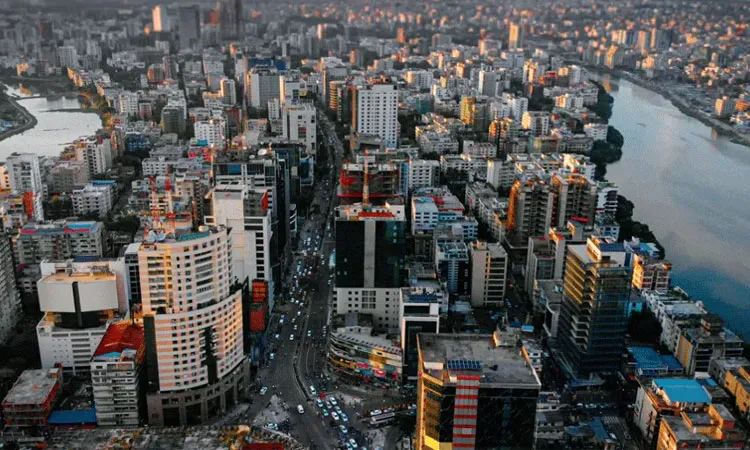
Dhaka's air quality has again reached a 'very unhealthy' level, according to the international air quality technology company IQAir's report at 8 a.m. on Monday, December 1st. Despite a temporary improvement from recent rain, Dhaka was ranked the fourth most polluted city in the world with an Air Quality Index (AQI) score of 216.
The poor air quality, exacerbated by various factors including climate change, places Dhaka among a group of South Asian and Central Asian cities experiencing severe pollution.
An AQI score between 201 and 300 is classified as 'very unhealthy', prompting emergency health warnings. In this condition, children, the elderly, and sick patients are strongly advised to limit their activities indoors and all others to limit outdoor activities. An AQI between 301 and 400 is considered "risky" or "hazardous," posing a serious health threat to residents.
Air pollution, which is determined by measuring five key pollutants (PM10, PM2.5, NO2, CO, SO2, and Ozone), is a major global public health crisis. The World Health Organization (WHO) estimates that seven million people die worldwide every year due to air pollution, which is a major cause of stroke, heart disease, lung cancer, chronic obstructive pulmonary disease, and respiratory infections.