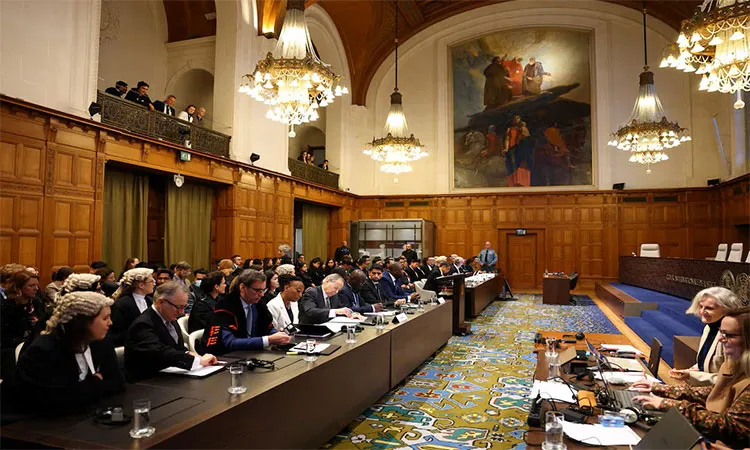
A landmark case accusing Myanmar of committing genocide against the Rohingya minority opened for full hearings on the merits at the United Nations’ top court on Monday.
This represents the first time the International Court of Justice (ICJ) has heard a genocide case in its entirety in over a decade. The proceedings are expected to set a major international precedent for how genocide is defined and proven.

The case was filed in 2019 by The Gambia, which accused Myanmar of violating the 1948 Genocide Convention during a 2017 military crackdown in Rakhine State. That offensive forced over 730,000 Rohingya to flee to Bangladesh, where they reported systemic killings, mass rape, and arson. Bangladesh now hosts more than 1.2 million Rohingya refugees in Cox’s Bazar and Bhasan Char.
For the first time in an international court, Rohingya survivors will provide testimony, though these sessions will remain closed to the public for privacy. "We are hoping for a result that tells the world we are victims and we deserve justice," said Yousuf Ali, a 52-year-old survivor.

Myanmar has consistently denied the allegations, characterizing the military operations as a "counter-terrorism" response. However, a UN fact-finding mission previously concluded the campaign included "genocidal acts."

The outcome of this case is also expected to influence other high-profile genocide claims currently before the ICJ, including South Africa’s case against Israel.