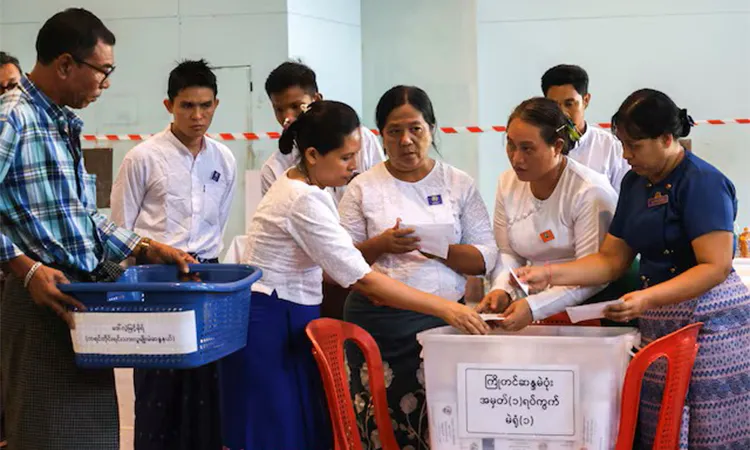
Myanmar began a multi-phase general election on Sunday, the first since the 2021 military coup that ousted the democratically elected government of Aung San Suu Kyi.
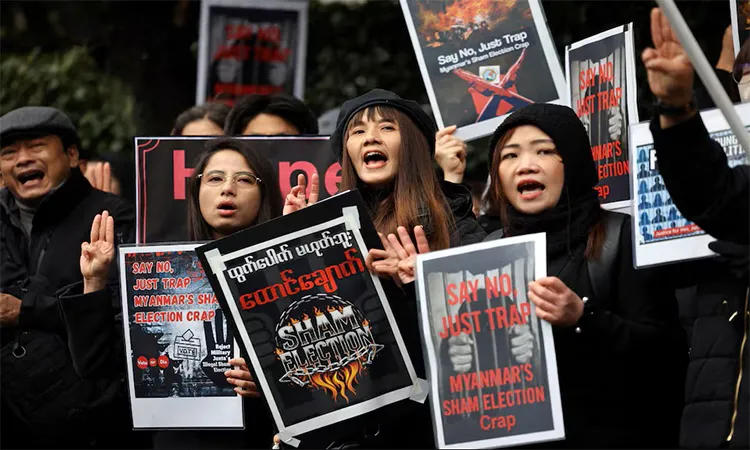
While the ruling junta frames the vote as a "fresh start" for the nation’s economy and political stability, the process has been widely condemned by the United Nations and Western powers as a sham designed to cement military rule.
Junta leader Min Aung Hlaing was among the first to vote in the capital, Naypyitaw. Despite long-standing speculation regarding his personal ambitions for the presidency, he told reporters that the office would be determined by the parliament once it convenes, noting that he does not currently lead a political party.
With the popular National League for Democracy (NLD) dissolved and its leaders imprisoned, the military-backed Union Solidarity and Development Party (USDP) is the undisputed frontrunner.
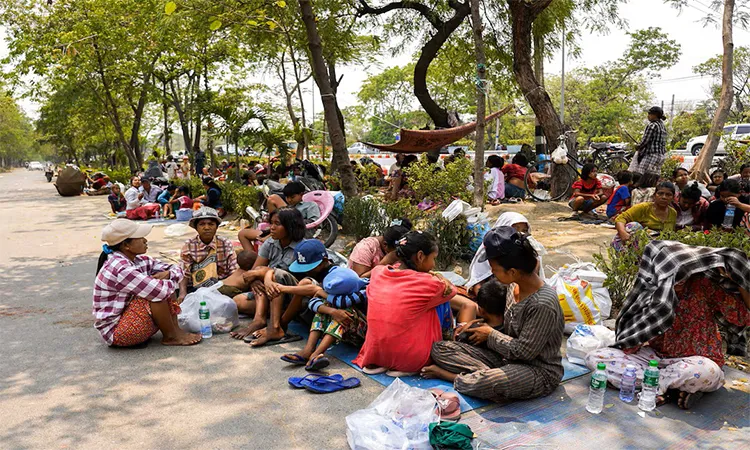
Due to the ongoing civil war, voting is only taking place in 265 of the country’s 330 townships. Large swaths of the country remain under the control of ethnic armed groups and resistance forces.
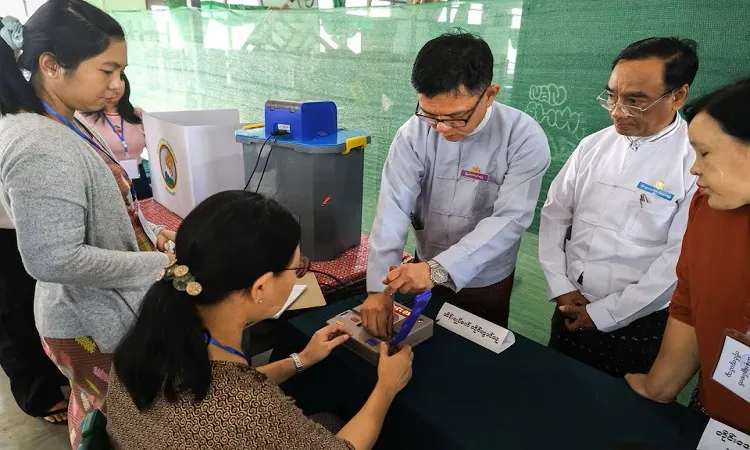
For the first time, Myanmar is using over 50,000 electronic voting machines, which the junta claims will prevent fraud.
While Western nations have dismissed the election's credibility, observers from Russia, China, India, and several other allied nations are present to monitor the proceedings.
Human rights groups and the UN have pointed out that an election held during an active civil war cannot be free or fair. Reports from major cities like Yangon and Mandalay describe a "lackluster" atmosphere compared to the high-energy elections of 2015 and 2020.

While the junta claims this will lead to a "better future," analysts argue that a government with a "civilian veneer" is unlikely to gain the international recognition needed to fix Myanmar's struggling economy.