Depositors remain uncertain about the future of five Sharia-based banks merged under the Bank Resolution framework as a new legal provision allows former owners to regain control. The confusion has triggered fresh withdrawal pressure, with many depositors now seeking only the return of their principal without profit.
Amid this situation administrators appointed to oversee the banks have asked Bangladesh Bank for a clear written position on whether the merger process will continue.
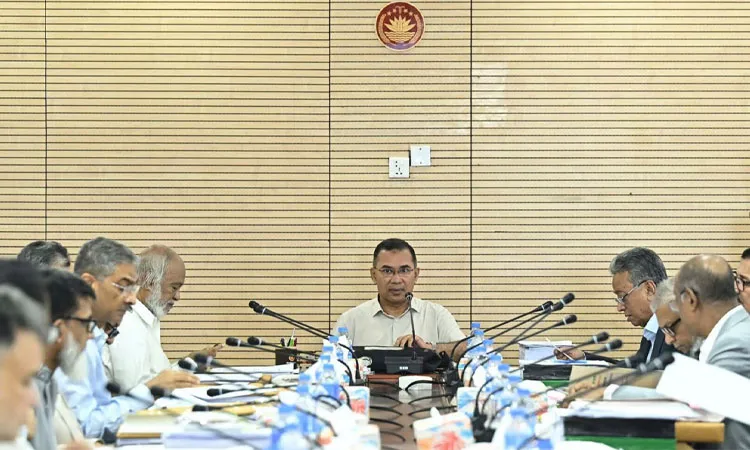
Officials said the administrators met Bangladesh Bank Governor Mostakur Rahman on Sunday to explain the growing instability and depositor concerns.
Under the Bank Resolution Ordinance, 2025, the interim government merged EXIM Bank, Social Islami Bank, First Security Islami Bank, Union Bank, and Global Islami Bank into a single entity, Sammilit Islami Bank. To manage the transition, Bangladesh Bank appointed five administrators, each supported by four as in November last year.
However, the recently enacted Bank Resolution Act, 2026 introduced Section 18(a), allowing previous owners to reclaim control by paying 7.5 percent of the public funds injected into the banks. Before the merger, EXIM Bank was controlled by Nazrul Islam Majumder of Nasa Group, while the other four banks were linked to S Alam Group.
Administrators warned that this provision has renewed public anxiety. Depositors had initially gained some confidence after the merger and government intervention. But uncertainty returned when authorities first announced no profit for 2024–2025, followed later by a reduced 4 percent return. The new legal provision has further shaken confidence, prompting renewed withdrawal attempts.
They also noted that banks are struggling to attract fresh deposits, while loan recoveries have slowed significantly.
Administrators urged the central bank to clarify whether the policy aims to restore previous ownership, and if so, how depositor funds will be protected.
Governor Mostakur Rahman did not provide immediate directives, stating only that the situation would be addressed as it evolves.
According to central bank data, Bangladesh Bank has provided Tk 47,840 crore in liquidity support to the five banks, while the government injected Tk 20,000 crore as capital into Sammilit Islami Bank. Additionally, Tk 12,000 crore from the Deposit Insurance Trust Fund has been allocated to repay up to Tk 2 lakh per depositor.
As of December last year, the five banks held combined loans of Tk 1,96,827 crore, of which Tk 1,65,781 crore—about 84.23 percent—were non-performing. By comparison, the overall banking sector’s default loan rate stood at 30.60 percent.
The capital shortfall across 22 banks reached Tk 2,82,603 crore, with these five banks accounting for Tk 1,50,691 crore of the deficit.