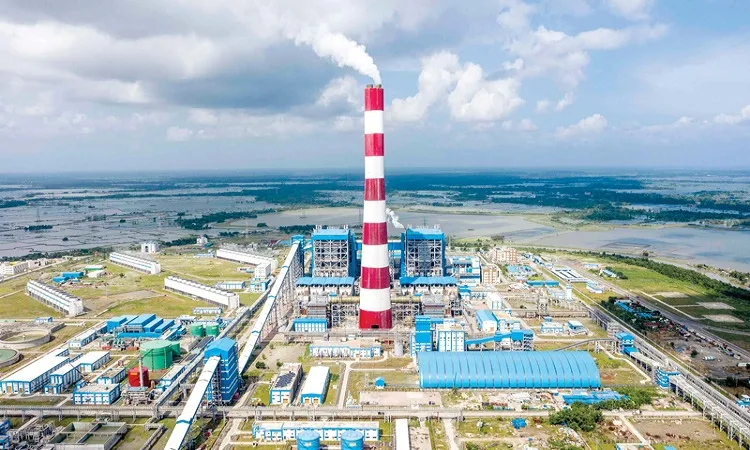
The interim government is actively engaged in renegotiating the power tariffs for the Rampal and Payra coal-fired power plants, using the significantly lower rate of the Matarbari plant as a benchmark. Officials and experts believe the original tariffs for Rampal and Payra were set excessively high under the previous administration, heavily favoring power producers at the state's expense.
The government's move aims to narrow the substantial gap between coal power tariffs: Matarbari (1,200MW): Tk8.45 per unit (fixed in April 2024). Payra (1,320MW): Tk12.00 per unit. Rampal (1,320MW): Tk13.57 per unit.
A six-member committee, formed in January by the Power Division, is reassessing major cost components for the Rampal and Payra projects, including. Imported coal prices, fuel handling, and logistics. Maintenance costs and plant efficiency. Capacity payments and debt servicing. Grid-connection charges.
Since assuming office in August 2024, the interim government has been reviewing power sector contracts. A member of the review committee stated that the Rampal and Payra agreements contained "unfavorable to the state" clauses designed to benefit the companies. Revision proposals have been placed before the companies.
Power Secretary Farzana Momtaz confirmed that discussions are ongoing, noting that moving beyond the existing binding contracts is not straightforward but expressed hope for a resolution. M Fouzul Kabir Khan, Power and Energy Adviser, previously stated that the Matarbari rate would be the reference point for more rational negotiations.
Due to the renegotiation, the finance ministry has suspended subsidy disbursements to Rampal and Payra since May.
This has resulted in both plants facing difficulties in servicing foreign loans and opening Letters of Credit (LCs) for coal imports. Payra (Bangladesh-China Power Company Limited) accumulated Tk2,440 crore, and Rampal (Bangladesh-India Friendship Power Company Limited) accrued Tk1,554 crore. Both joint-venture companies (Payra: Bangladesh/China; Rampal: Bangladesh/India) have formally requested the BPDB (which holds a 50% stake in both) to provide funds for LCs. Zahid Hussain, a contract review committee member, noted that the Power Purchase Agreements (PPAs) are extremely one-sided, limiting the government to revisions only through mutual agreement. He called the contracts "textbook examples of crony capitalism."
Separately, several other power plants (operated by RPCL and BR Powergen) are facing payment delays because their tariff approvals lacked clearance from the Cabinet Committee on Government Purchase (CCGP) under the previous government.
The finance division suspended subsidy payments in May due to ongoing tariff negotiations. As of September, Tk1,020 crore remains unpaid to these plants, forcing them to run operations through bank borrowing.