- National
- Bangladesh
- Business
- International
- Sports
- Entertainment
- Politics
- Technology
- Life Style
- Religion
- Opinion
- FIFA World Cup 2026
Thursday, 27 August 2026


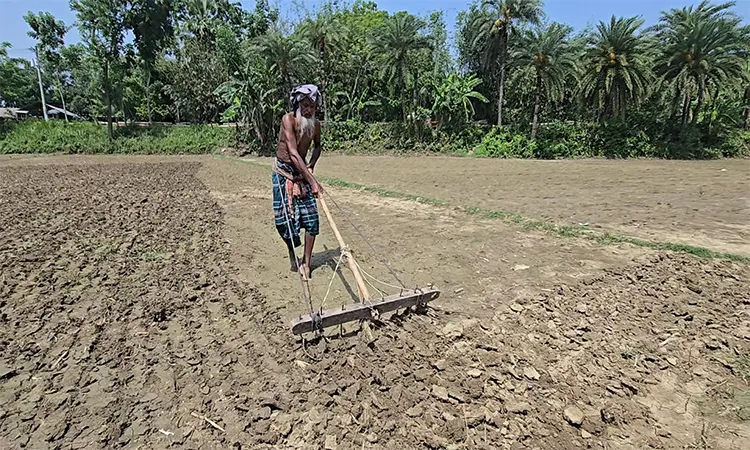
Farmers in Faridpur, known as the "jute capital" of Bangladesh are facing severe challenges as a shortage of diesel and frequent load-shedding threatens the jute sowing season.
With irrigation stalled concerns are growing over whether the district can meet its production targets this year.
The Department of Agricultural Extension (DAE) set a cultivation target of 87,000 hectares for the current season. Traditionally, farmers sow jute immediately after harvesting onions, relying on irrigation to maintain the soil moisture necessary for seeds to sprout. While 60% of the target has already been planted, the remaining fields are at risk.

Local farmers from Saltha and Nagarkanda reported that without timely water, the seeds will fail to germinate. The situation is worsened by a receding underground water table and a reported shortage of fertilizers in local markets.
The supply chain disruption is partly attributed to volatility in the international oil market. Farmers fear that if the diesel crisis persists, it will not only reduce jute yields but also impact other essential rabi crops damaging the local economy.

To tackle the crisis, the administration has introduced several measures:
Fuel Cards: DAE Deputy Director Shahduzzaman stated that "fuel cards" are being issued to ensure genuine farmers receive priority diesel supplies.
Designated Stations: Deputy Commissioner Mohammad Kamal Hasan Molla announced that specific filling stations have been identified solely to provide diesel for irrigation.
Monitoring: The district administration has increased surveillance on all petrol pumps to prevent hoarding and artificial price hikes.
Agricultural officials remain hopeful that the crisis will ease significantly if the region receives heavy rainfall within the next week.