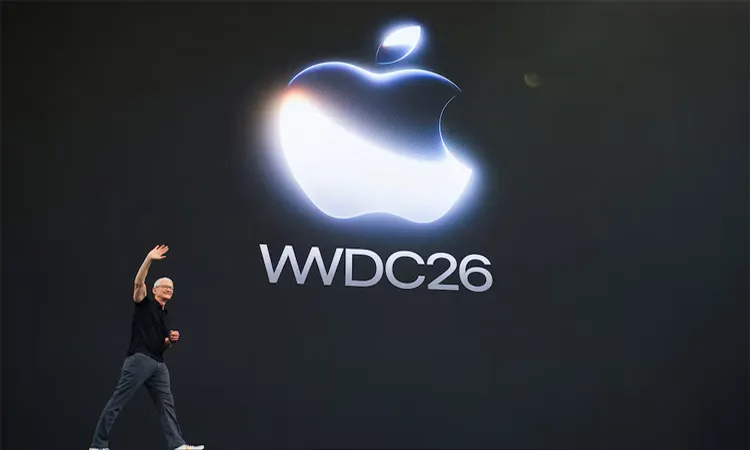
Apple is putting its artificial intelligence ambitions to the test at its annual Worldwide Developers Conference (WWDC). Opening the event on Monday, CEO Tim Cook announced that the day's focus would center on "Apple Intelligence" and a long-awaited overhaul of its voice assistant Siri.
"We've always believed that technology should be personal, powerful and easy to use" Cook said, emphasizing that the tight integration of Apple's hardware and software unlocks the full potential of its products.
Apple is racing to close the gap with tech giants like Microsoft and Google, who have rapidly integrated "agentic" AI software capable of performing complex tasks into everyday computing. While rivals envision a future where AI agents replace traditional apps entirely, Apple has historically taken a more cautious approach, maintaining strict control over user privacy.
To power its new AI capabilities, Apple is leaning on strategic partnerships including an integration with Google's Gemini models. However, analysts believe Apple's true advantage lies within its own ecosystem. The company boasts powerful custom chips across its 2.5 billion active devices that can run AI tasks locally, combined with a massive trove of personal user data.
The primary challenge for Apple is successfully transforming Siri into a smarter context-aware assistant. Experts note that an everyday-useful Siri, deeply integrated into the iPhone ecosystem, could be a game-changer.
Unlike competitors who often focus on technical specifications and computing metrics, Apple is expected to focus purely on the user experience demonstrating how AI can make daily tasks simpler and more intuitive. However, the company is also signaling a shift in its financial strategy, suggesting a move away from stock buybacks to make room for greater investments in AI infrastructure.