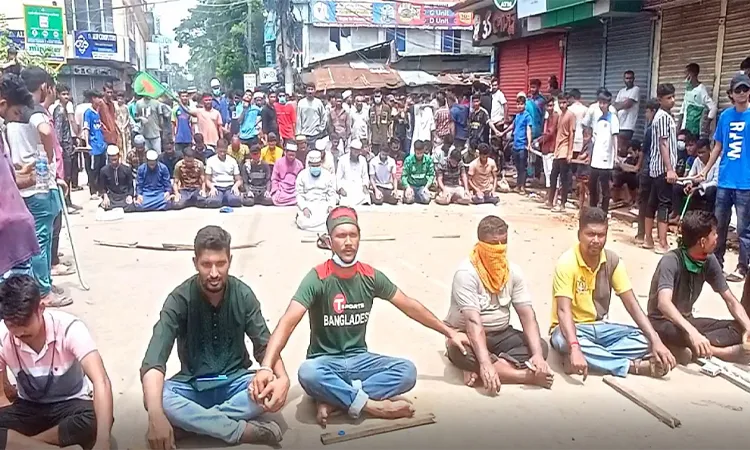
The student-led quota reform movement of mid-2024 transformed into a nationwide mass uprising culminating in the fall of Sheikh Hasina's 17-year government on August 5. In Jhalakathi thousands of students took to the streets to demand a democratic non-discriminatory Bangladesh standing firm against corruption and authoritarianism.
Triggered by deadly crackdowns on protesters—including the tragic deaths of Abu Sayeed and Mir Mugdho—the movement rapidly escalated. While initially facing resistance from ruling party factions (Awami League, Jubo League Chhatra League) and police, Jhalakathi's students launched coordinated protests on August 3. By August 4, they took complete control of the district and its upazilas, forcing ruling party members to retreat and flee.
On the morning of August 5 students peacefully secured the highways. Following news of the Prime Minister's resignation and departure, agitated crowds targeted the local residence of Awami League leader Amir Hossain Amu. During the ensuing vandalism, more than 50 million BDT in domestic and foreign currencies was reportedly recovered from the property.
Local political figures including District BNP Member Secretary Advocate Shahadat Hossain and District Jamaat Ameer Advocate Hafizur Rahman played key roles in uniting various student factions during the crucial final days of the protests.
The struggle came at a heavy cost. Ten individuals from Jhalakathi lost their lives while participating in the historic July-August demonstrations in the capital Dhaka. Their sacrifices remain central to the district's memory of the revolution.