South Korea has recorded its highest temperature in over a century prompting authorities to urge residents to immediately halt all outdoor activities. On Sunday, the southeastern city of Yangsan hit a record 42.5°C marking the fifth consecutive day temperatures exceeded 40°C in the region.
With the blistering heat spreading rapidly the government issued emergency heatwave alerts for over 20 localities. The national weather agency warned that indoor spaces without air conditioning are now highly dangerous advising citizens to seek out designated cooling centers and stay hydrated. To protect vulnerable communities, Prime Minister Han Seong-sook ordered local officials to conduct thorough safety checks and ensure stable power and water supplies.

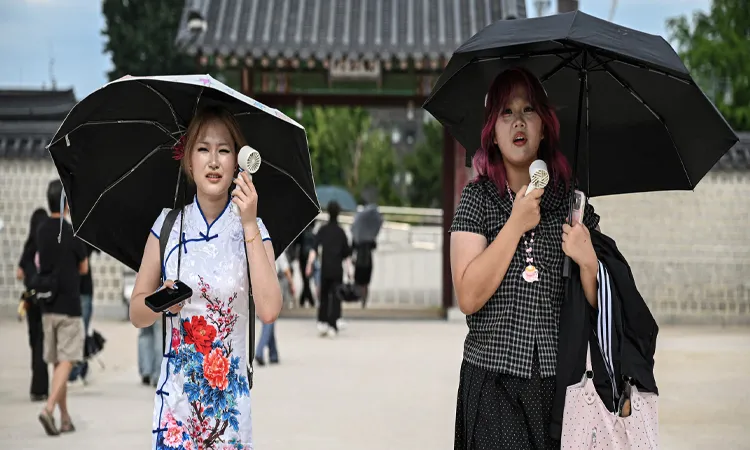
The severe conditions are disrupting daily routines. Citizens are taking refuge in air-conditioned malls and public mist-spray zones. In Changwon, the professional baseball league canceled matches for a second day as local temperatures neared 40°C. Neighboring North Korea is also enduring punishing weather, with certain regions reaching 40°C and nighttime temperatures remaining above 25°C in Pyongyang.

Meteorologists note that the average number of heatwave days in South Korea has more than doubled over the last five years. Scientists attribute this intensifying extreme weather to a combination of human-induced climate change and the return of the El Niño climate phenomenon.
Authorities are closely monitoring Typhoon Dolphin which is tracking south of the Korean peninsula. The storm's trajectory will dictate the immediate future of the heatwave—either worsening the suffocating humidity or offering temporary relief through heavy rain and cloud cover.