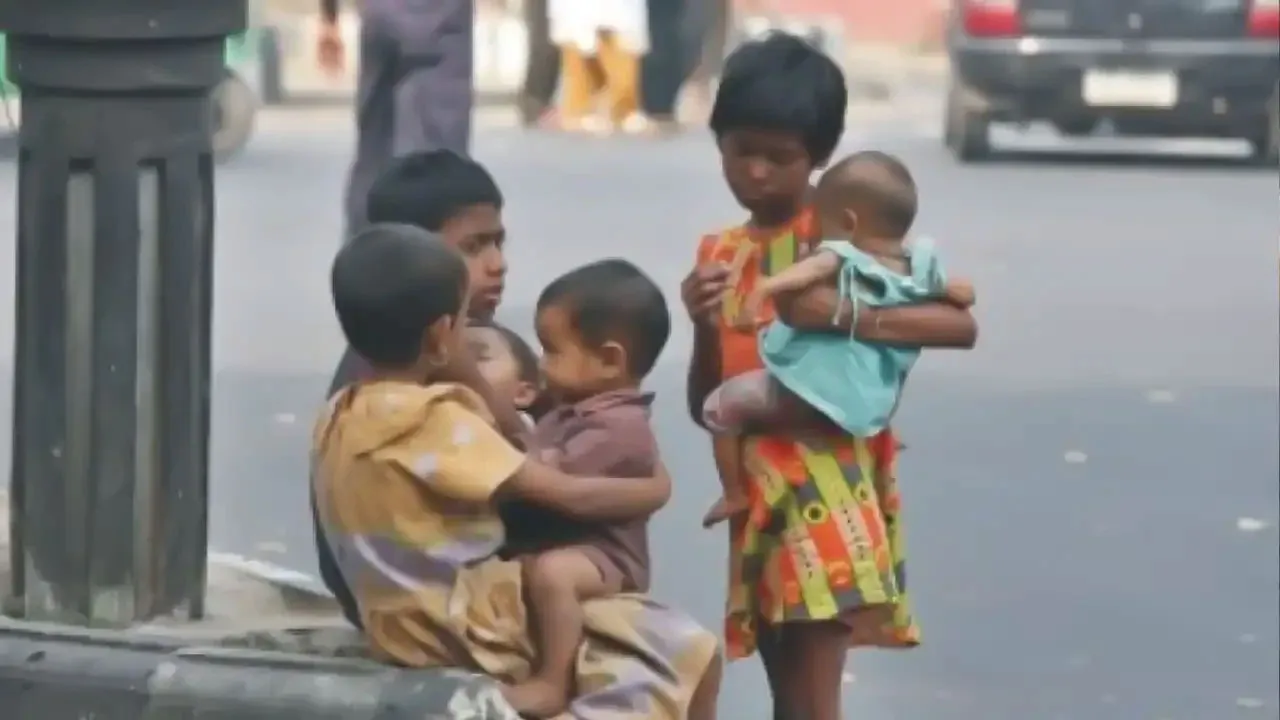
A Tk 426 crore government project aimed at rehabilitating street children in Bangladesh has come under scrutiny over its proposed expenditure, with experts questioning the large allocations for consultancy fees, administrative activities and promotional campaigns compared with the limited financial support earmarked for the children.
The initiative seeks to reunite street children with their families or relatives by providing financial assistance to families willing to take them back.
Fourteen-year-old Shamim is among those who have experienced life without family support. He lost his mother during childhood, and after his father remarried, he found no place in the family home, leaving him to live on the streets.
Recalling his experience of trying to return home, Shamim said his mother told him, "If you don't work inside, you cannot come to my house. If you come home, I will break your legs."
Under the proposed project, families taking in street children will receive Tk 1,000 per month, subject to certain conditions. However, the project has drawn criticism over the disparity between the assistance provided to children and the money allocated for administrative and consultancy expenses.
A counselling officer is set to receive Tk 5 lakh per month in consultancy fees, amounting to Tk 3 crore over five years. By comparison, a child under the programme would receive only Tk 60,000 over the same period.
A project monitoring expert has also been allocated Tk 3 crore in consultancy fees. 24,200 Children Targeted for Rehabilitation According to the project plan, the government intends to spend the allocated funds on rehabilitating a total of 24,200 children.
The programme includes: - Reintegrating 6,600 children separated from their families into family and community life. - Providing shelter for 1,900 children. - Arranging formal and non-formal education for 4,500 children. - Providing financial assistance to 5,700 street children to help them become self-reliant. - Reuniting another 5,500 children with their families under a new initiative offering conditional monthly assistance of Tk 1,000. The last initiative is being added to four existing programmes. Questions Over Consultancy and Administrative Costs The proposed project budget includes Tk 7 crore for consultancy fees and Tk 15 crore for organising festivals and celebrations.
Other allocations include Tk 1.07 crore for expenses excluding officials' mobile phone bills, Tk 6.5 crore for meetings and seminars, Tk 61 crore for outsourced manpower, Tk 5.64 crore for travel expenses and Tk 10 crore for publicity and promotional activities.
These proposed expenditures have raised concerns among experts, who question whether such spending is justified in a project primarily intended to improve the lives of vulnerable children.
Barrister Al Mamun Russell, an analyst on street children's rights, criticised the allocation of funds for administrative activities compared with the limited monthly assistance for children.
"You have allocated Tk 1 crore for mobile phone bills and Tk 6 crore for seminars. But what are you doing for the street children every month? You will give them only Tk 1,000 each. In reality, this is something we call a 'plan'. The 'pari' (plan) is in one place, while the 'kalpana' (imagination) is somewhere else. The two do not come together," he said.
Experts have also described the project as an attempt to benefit officials under the guise of rehabilitation, warning that taxpayers' money could be wasted through unjustified expenditure. Former Planning Secretary Questions Project Rationale Former Planning Ministry Secretary Mamun Al Rashid also questioned the rationale behind the initiative, particularly its proposed foster family arrangement.
"I no longer see any justification for turning vulnerable children into guinea pigs for experiments under the name of foster families," he said.
Referring to the project's various expenditure categories, he suggested that the initiative appeared to have been designed primarily to create a project rather than address the actual needs of street children.
He alleged that some government projects are formulated to secure financial and other benefits, with questionable expenditure justified through artificial cost estimates and supporting vouchers.
"In Bangladesh, this is generally how projects of this kind operate," he added.
Experts have urged the government to ensure that public money is not wasted in the name of rehabilitating children whose daily struggle is often simply to secure a meal.
They stressed that the project's spending priorities should reflect the actual needs and welfare of the children it is intended to support.