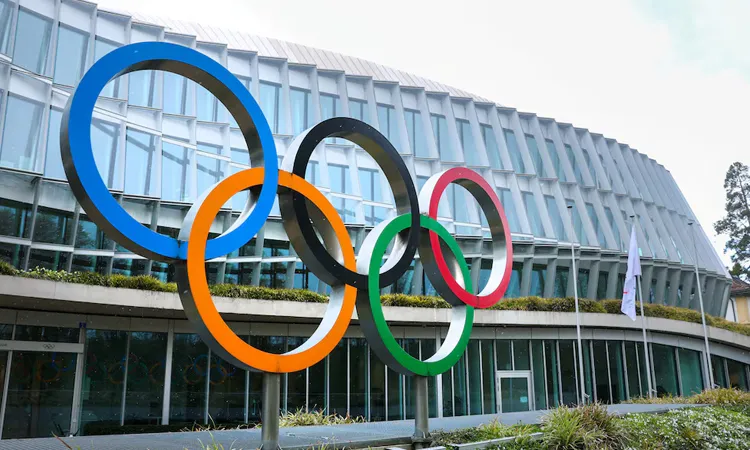
The International Olympic Committee (IOC) has announced new eligibility rules that effectively bar transgender athletes from competing in female category events at the Olympic Games.
Under the updated policy, only athletes classified as biological females—determined through a one-time screening for the SRY gene—will be eligible to compete in women’s events from the Los Angeles 2028 Olympics onward. The SRY gene is associated with male sex development, and the IOC says its presence provides a reliable biological marker.
The test, which can be conducted using saliva, blood, or cheek swabs, will be required only once in an athlete’s career. The policy follows an 18-month consultation process and is expected to be widely adopted by international sports federations, replacing previously fragmented rules.

IOC President Kirsty Coventry said the decision was based on fairness and safety in competition. She argued that allowing athletes with male biological development to compete in women’s events could create an uneven playing field and potential safety risks in certain sports.
The new rules mark a significant shift from the IOC’s earlier approach. In 2021, the organisation allowed individual sports federations to set their own guidelines on transgender participation. The latest decision introduces a unified global standard.
However, the policy has drawn criticism. Rights groups and some national Olympic bodies have raised ethical and legal concerns about genetic testing. The French Olympic Committee warned that such testing could conflict with France’s bioethics laws.
The IOC clarified that the rules will not apply retroactively and will not affect grassroots or amateur sports. Limited exceptions will be made for athletes with certain rare conditions, such as Complete Androgen Insensitivity Syndrome (CAIS), where testosterone does not provide a performance advantage.
Athletes who test positive for the SRY gene will still be eligible to compete in male or open categories.
The issue of gender eligibility has been a growing source of debate in global sport. The Tokyo 2020 Olympics saw the participation of Laurel Hubbard, the first openly transgender athlete to compete at the Games. More recently, controversies at the Paris 2024 Olympics reignited discussions on fairness and inclusion.
Separately, policies in countries like the United States have also tightened. U.S. President Donald Trump previously signed an order restricting transgender athletes from competing in female categories in school and professional sports.
With the Los Angeles 2028 Olympics approaching, the IOC’s decision is expected to shape global sports policy and intensify debate over fairness, inclusion, and athlete rights.