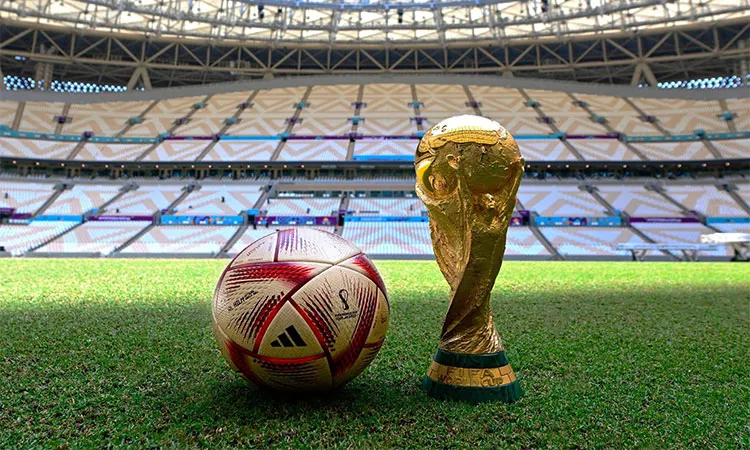
A senior German politician has suggested that Germany could boycott the 2026 FIFA World Cup if the United States presses ahead with plans to annex Greenland, injecting geopolitics into preparations for the tournament just months before kickoff.
The World Cup, set to begin in five months, will be jointly hosted by the United States, Mexico, and Canada and feature a record 48 teams. FIFA is now monitoring growing political tensions linked to remarks by U.S. President Donald Trump, who has renewed calls to bring Greenland under U.S. control, citing national security concerns.
The proposal has drawn strong opposition from Denmark, the European Union, and NATO. In Germany, Jürgen Hardt, a lawmaker from the Christian Democratic Union and an ally of Chancellor Friedrich Merz, said a boycott should not be ruled out if diplomatic efforts fail.

In an interview with Bild, Hardt said canceling participation would be a last-resort measure aimed at pressuring President Trump to reconsider his stance on Greenland. While he expressed hope for a diplomatic solution, he said symbolic pressure could be necessary.
Germany’s potential withdrawal would carry significant weight. The four-time world champion is one of football’s most influential nations, and its absence would be a major sporting and financial setback for FIFA and the host countries.
The dispute extends beyond football. The Trump administration has imposed 10 percent tariffs on several European countries, including Germany, France, and Denmark, citing opposition to the Greenland proposal. The move has further strained transatlantic relations.
Despite the tensions, the United States continues preparations to host the tournament amid domestic challenges, including immigration raids and public protests.
The boycott idea has also gained traction in public debate. British broadcaster Piers Morgan suggested on social media that several major European teams could consider suspending participation during ongoing trade disputes, though his remarks appeared more provocative than formal.
Similar concerns have been voiced by figures within German football and international coaches in recent weeks. For now, the possibility of a boycott remains speculative.
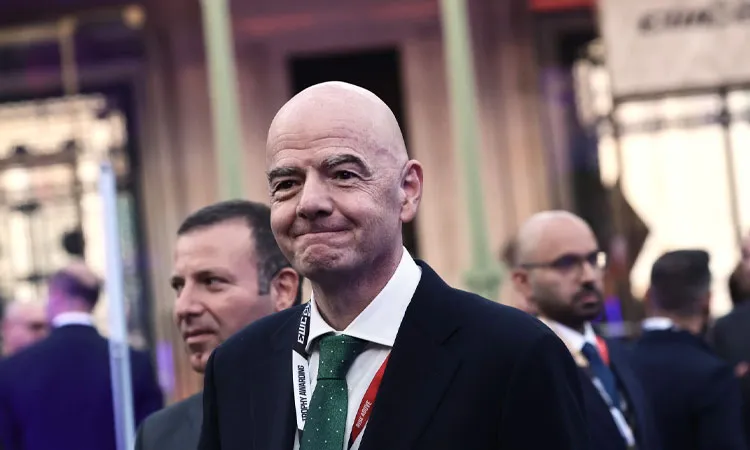
However, if political threats turn into action, FIFA and its president Gianni Infantino could face an unprecedented challenge to the world’s largest sporting event before the first match is played.