


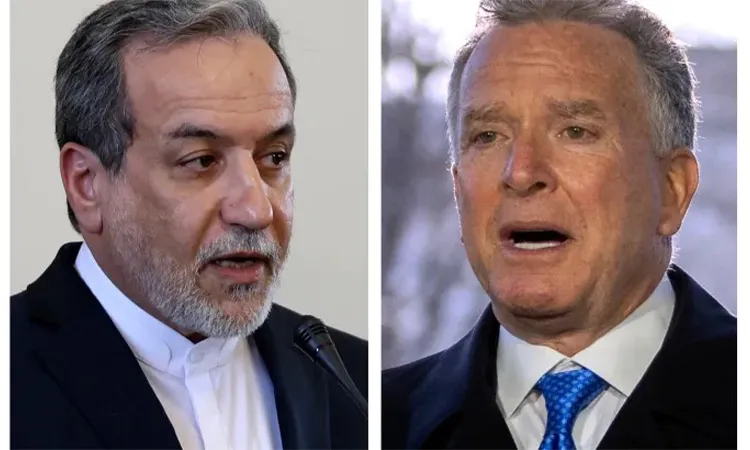
Senior US and Iranian officials are scheduled to meet in Oman today for direct talks aimed at averting a full-scale military confrontation.
The meeting follows a massive US military build-up in the Middle East and a 12-day war in June 2025, during which the US bombed three major Iranian nuclear facilities. Tensions have further escalated due to a violent crackdown on anti-government protesters in Iran, where human rights groups report thousands killed and over 50,000 arrested.
Despite the urgency, both nations remain deeply divided on the scope of the discussions: The US Position: Washington demands a total freeze of Iran's nuclear program and the disposal of its enriched uranium. Secretary of State Marco Rubio insists that any deal must also address Iran's ballistic missiles, human rights record, and support for regional proxies like Hezbollah and Hamas.
The Iranian Position: Tehran maintains that talks must be limited to the nuclear program and the lifting of crippling economic sanctions. President Masoud Pezeshkian stated he has instructed negotiators to pursue "fair and equitable" terms.
The Iranian delegation is led by Foreign Minister Abbas Araghchi. The US is represented by special envoy Steve Witkoff, with President Trump's son-in-law, Jared Kushner, also expected to participate.
President Trump has maintained a "maximum pressure" stance, warning that the Iranian leadership should be "very worried." Meanwhile, regional mediators—including Egypt, Turkey, and Qatar—fear that a failure in diplomacy could lead to a wider conflict or long-term regional chaos.
For Iran’s leaders, these talks represent a critical opportunity to stave off further military action against a regime that analysts describe as being at its weakest since 1979.

