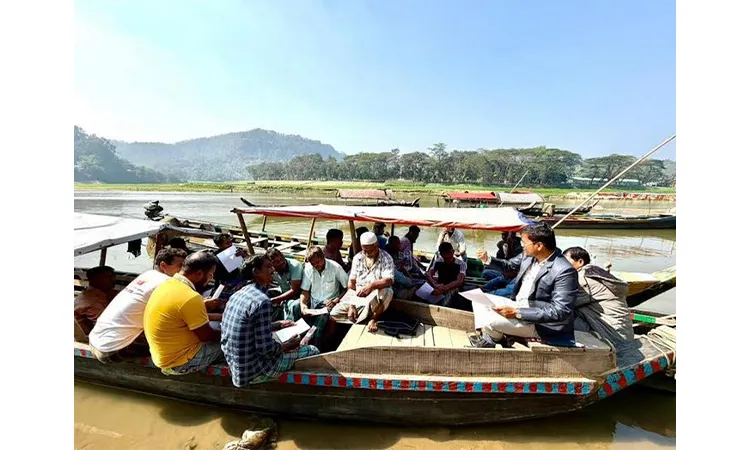
The Upazila Information Office conducted a special briefing on the banks of the Matamuhuri River on Wednesday to raise awareness about the upcoming national referendum and the 13th General Election.
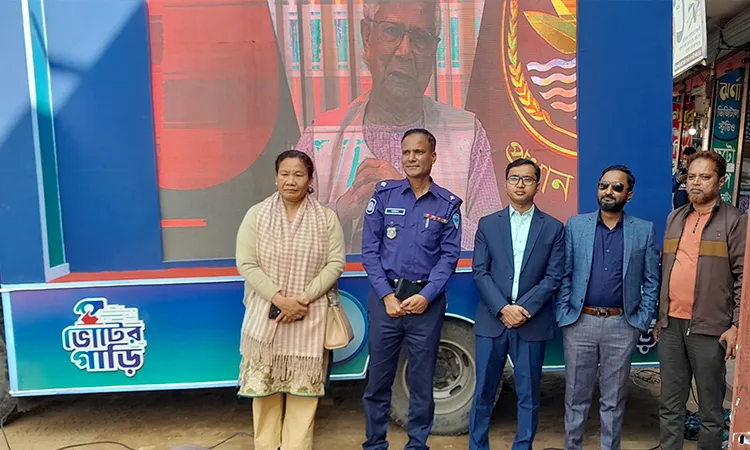
The campaign, led by Upazila Assistant Information Officer Mohammad Rashedul Haque, targeted boatmen and working-class citizens who often remain disconnected from central political updates. This initiative is part of a broader push to reach remote hilly areas through leaflet distribution and video screenings.
During the 10-minute briefing, officials explained that a "Yes" vote in the referendum—held alongside the parliamentary election—would approve several constitutional reforms:
A proposed 10-year limit on serving as Prime Minister. Restricting the President’s sole authority to pardon convicted criminals. Transitioning to a two-house parliamentary system.
"The public's direct opinion on these issues is vital for ensuring citizen participation in state governance," said Mohammad Rashedul Haque.
Awareness Gaps in Remote Areas Despite these efforts, a significant knowledge gap remains in the remote unions of Lama, which spans over 671 square kilometers. Field visits revealed that while excitement for the February 12 election is high, many voters—particularly the elderly and those in tribal neighborhoods—do not fully grasp the "Yes/No" referendum concept.
Monghaing Marma, a resident of Rupsipara Union, shared his confusion: "I know how to vote for my candidate, but I don’t understand why there is a separate referendum. More awareness campaigns are needed so we can make an informed choice."
The 13th National Parliamentary Election and the constitutional referendum are scheduled for February 12, 2026.