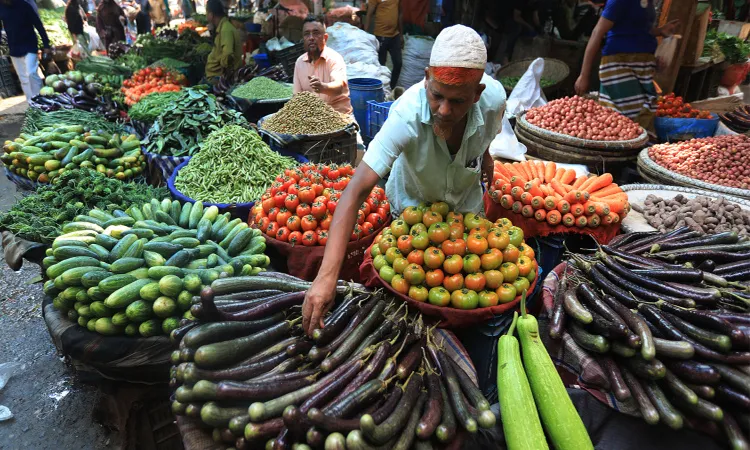
The holy month of Ramadan teaches restraint, compassion and social responsibility. It is a time meant to deepen faith and care for others, especially the poor and vulnerable. Yet every year, Ramadan is marked by sharp price hikes and artificial shortages of essential goods, turning a month of mercy into a time of hardship for many fasting people.
Islamic tradition reminds us that during Ramadan, Allah increases the rizq (sustenance) of believers. As taught by Prophet Muhammad (peace be upon him), this month carries special blessings. In reality, however, excessive profiteering by a small group of traders blocks these blessings from reaching the wider population.
In Bangladesh, a limited number of large traders control much of the import and supply of essential commodities. Their actions affect millions. During Ramadan, many of these traders create artificial shortages and raise prices far beyond reasonable levels. This practice is not only unethical and harmful to society, but also contradicts Islamic principles.
Price hikes are not limited to imported items. The prices of locally produced vegetables, fish and meat also rise sharply during Ramadan. Despite repeated appeals and directives from the government, effective control of the market remains weak. As a result, ordinary consumers, especially low-income families, suffer the most.
This situation cannot be allowed to continue year after year. Building a fair and welfare-oriented economy requires strong market oversight and accountability. The government must take the lead in ensuring that agricultural products move directly from farmers to consumers, reducing the influence of middlemen. Strong coordination among the Ministry of Commerce, the Ministry of Agriculture and tax authorities is essential.
Action must also be taken against hoarding, illegal stockpiling and transport extortion. Journalists, civil society groups and consumers themselves have a role to play by raising their voices against unfair practices. Such reforms would not only protect consumers but also help marginal farmers earn fair prices for their produce.
Islam clearly condemns hoarding and dishonest trade. According to a saying of the Prophet (peace be upon him), traders who engage in deceit and exploitation will face severe consequences in the Hereafter, except those who conduct business with honesty, fairness and fear of Allah. As noted by Imam Ghazali in Kimiyya-e-Sa’adat, honest traders will be raised alongside the righteous on the Day of Judgment.
Another narration reported by Bayhaqi states that wealth earned through unlawful means brings no blessing, even if it is spent on charity. A body nourished by unlawful earnings, the Prophet warned, will not enter Paradise.
These teachings serve as a clear reminder: worship loses its meaning when built on injustice. Ramadan calls for moral responsibility, not exploitation. May Allah guide us toward fairness, compassion and integrity in both faith and daily life.
Author: Mohammed Nurul Absar Taiyobi is a writer, researcher, and Islamic thinker. He is the Founder President of the Expatriate Journalists Association (PRASAS) based in Dubai, UAE. Additionally, he serves as the Chairman of the Islamic Research Center located in Abu Dhabi, UAE. For correspondence, he can be reached at: muntyping@gmail.com