- National
- Bangladesh
- Business
- International
- Sports
- Entertainment
- Politics
- Technology
- Life Style
- Religion
- Opinion
Saturday, 04 April 2026

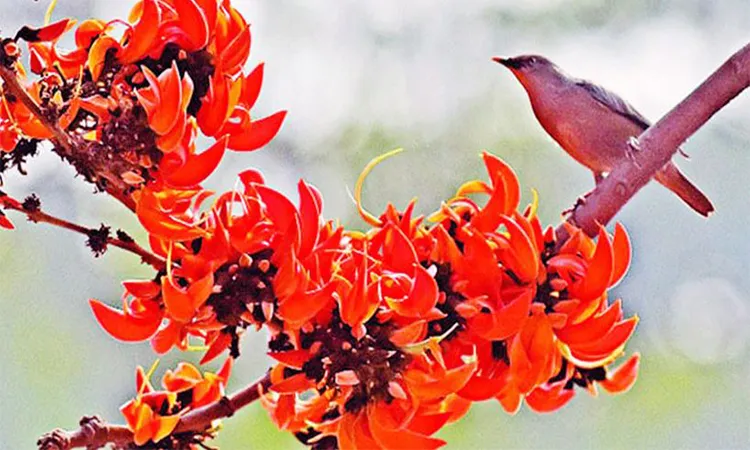
‘Love is in the air, a dream in the eyes; spring has arrived.’ Today, February 14, marks the first day of Falgun—the dawn of spring and the eleventh month of the Bengali calendar.
Spring represents renewal and the vibrant pulse of life. In Bangladesh, the formal celebration of Pahela Falgun began in 1991, pioneered by the Faculty of Fine Arts at Dhaka University. Coincidentally, February 14 also marks Valentine’s Day, creating a double celebration of nature and emotion.
As winter’s harshness fades, nature awakens. Trees sprout fresh leaves, flower buds bloom, and the air carries a sweet fragrance. Birds sing while butterflies herald the arrival of the "King of Seasons." This seasonal shift rejuvenates not just the landscape, but also the spirit of the people, who dress in vibrant spring colors to join the festivities.
The name Falgun originates from the constellation Falguni. Historically, the Bengali calendar followed both lunar and solar cycles, with Falgun marking the month of the full moon. The modern cultural celebration gained momentum in the 1950s and 60s. During that era, celebrating Pahela Falgun and embracing Rabindra Sangeet became symbols of Bengali identity and cultural resistance.
Spring has long inspired Bengali literature. Poet Subhash Mukherjee famously wrote, “Whether flowers bloom or not, today is Spring.” Baul legend Shah Abdul Karim and Nobel Laureate Rabindranath Tagore also immortalized the season through countless songs and poems that remain central to the festivities today.
Beyond the flowers, Falgun carries deep political and historical weight. The vibrant red of the Shimul and Krishnachura flowers serves as a poignant reminder of the martyrs of the 1952 Language Movement. It was during this month that Rafiq, Shafiq, Barkat, and Salam sacrificed their lives for the Bengali language. Their bravery paved the way for the eventual independence of Bangladesh, making Falgun a month of both beauty and profound national pride.
Comment