


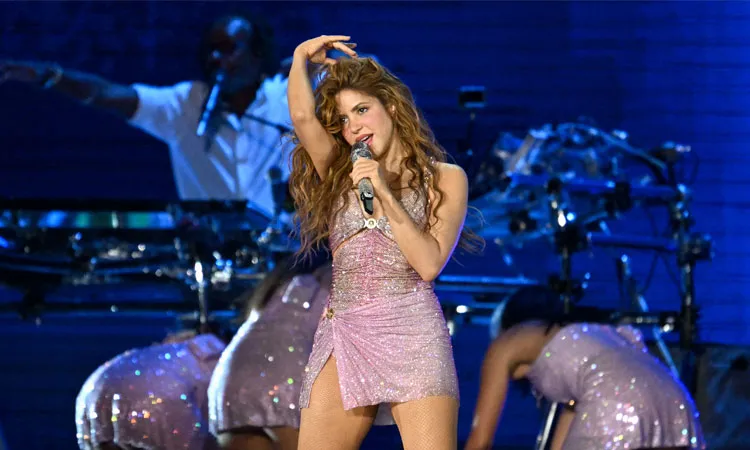
A five-show concert residency by global pop star Shakira in El Salvador’s capital is reinforcing President Nayib Bukele’s effort to reshape the country’s global image—from one of the world’s most violent nations to one of the safest in the region.
The sold-out concerts at the Estadio Nacional Jorge “El Mágico” González follow a series of high-profile international events, including surfing championships and the Miss Universe competition held two years ago. While El Salvador has hosted major artists before—such as Bad Bunny in 2022 and Karol G in 2024—those performers typically staged just one show.

Shakira originally scheduled three dates of her Las Mujeres Ya No Lloran World Tour. After tickets sold out quickly, Bukele wrote on X that El Salvador and Central America were changing and praised efforts to extend the residency. Shakira responded shortly afterward, announcing two additional dates.
Organizers say tens of thousands of fans, including many from abroad, attended the shows. Many credit the country’s improved security for making such large-scale events possible.
That security turnaround stems from a nearly four-year-old state of emergency that has enabled a sweeping crackdown on criminal gangs. Under the policy, some constitutional rights—such as immediate access to legal counsel—have been suspended. Authorities have detained more than 91,000 people, often without due process, and hundreds have died in custody without convictions.

Human rights groups in El Salvador and abroad have strongly criticized the measures. Still, many Salvadorans support Bukele’s approach, citing a sharp drop in gang violence. The results have also drawn attention from neighboring countries facing similar security challenges.
Tourism Minister Morena Valdez said hotels in San Salvador were fully booked during the concerts, with some visitors staying at nearby beaches or in surrounding cities. The events are expected to generate about $55 million in economic activity.
“It’s our first time in El Salvador, but we’re going to return,” said Roy Mora, who traveled from Cartago, Costa Rica, for one of the shows. “The security is real—you have to see it to believe it.”
His wife, María José De Mora, echoed the sentiment outside the stadium, saying they felt safe throughout their visit.
Last month, Bukele traveled to Costa Rica at the invitation of President Rodrigo Chaves to attend the groundbreaking of a new prison inspired by El Salvador’s large-scale detention center for suspected gang members.
Bukele has openly dismissed criticism of his tactics, pointing to improved safety and strong domestic support.
“I don’t care if they call me a dictator,” he said in a national address last June. “I prefer that to seeing Salvadorans killed in the streets.”
Outside the stadium, Fidel Pérez said he and his family drove from Guatemala City to attend the concert and planned to spend several days exploring beaches and a nearby volcano.
“We’re not afraid,” Pérez said. “We’re going everywhere without problems.”

