- National
- Bangladesh
- Business
- International
- Sports
- Entertainment
- Politics
- Technology
- Life Style
- Religion
- Opinion
- FIFA World Cup 2026
Monday, 29 June 2026


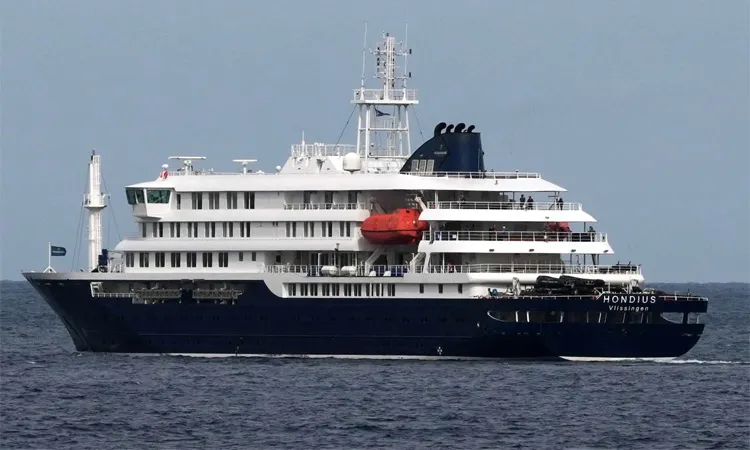
A cruise ship linked to a hantavirus outbreak is heading to the Canary Islands as health authorities monitor passengers and crew.
Three passengers aboard the MV Hondias have tested positive for hantavirus, and one of them has died. Authorities have identified five suspected infections so far.
A total of 146 passengers and crew members from 23 countries remain on board. After the ship reaches the Canary Islands, everyone will undergo health screening and testing before being allowed to return home.
Hantavirus is a group of viruses mainly spread by rodents such as rats and mice. The virus was named after the Hantan River in South Korea.
According to the World Health Organization (WHO), more than 20 hantavirus species have been identified worldwide. Most are linked to rodents and spread through contact with infected animals’ urine, droppings or saliva. People can become infected by inhaling dust contaminated with these substances.

Globally, an estimated 10,000 to 100,000 people are infected each year, mainly in Asia and Europe.
One rare strain, known as the Andes virus, can spread from person to person. South Africa’s National Institute for Communicable Diseases said the virus was detected in two people who disembarked from the ship.
The Andes virus is usually found in Argentina and Chile. During an outbreak in Argentina in 2018, one infected person reportedly transmitted the virus to 34 others, resulting in 11 deaths.
The WHO says hantavirus can spread through close contact in rare cases involving the Andes strain. Following confirmation of the virus on the ship, passengers and crew have been advised to maintain distancing measures similar to those used during the Covid-19 pandemic. Passengers are currently confined to their cabins to reduce the risk of transmission.
Health experts say isolation of infected patients, regular handwashing, contact tracing and strict infection-control measures are essential.
Hantavirus is mainly transmitted through exposure to infected rodents and their waste. People may become infected after inhaling contaminated dust or air particles.
In rare cases, the virus can spread through rodent bites.
The risk increases in places with rodent infestations, especially during activities such as cleaning poorly ventilated rooms, farming, forestry work or staying in rodent-infested buildings.
Hantavirus can cause two serious illnesses.
The first is Hantavirus Pulmonary Syndrome (HPS). Early symptoms include fever, fatigue and muscle pain. Patients may later develop headaches, dizziness, chills, stomach problems and severe breathing difficulties requiring emergency treatment. The Andes strain is associated with a mortality rate of about 20 to 40 percent. Symptoms can appear between one and eight weeks after exposure.
The second illness is Hemorrhagic Fever with Renal Syndrome (HFRS). It usually begins with flu-like symptoms and can lead to kidney failure, low blood pressure and internal bleeding.

Experts say the overall global risk of hantavirus infection remains low, and there is currently no evidence that the virus has spread beyond the ship.
In February 2025, Betsy Arakawa, wife of Oscar-winning actor Gene Hackman, reportedly died from hantavirus-related respiratory complications after dead rats and a rodent nest were discovered near her home.
However, scientists caution against drawing conclusions before a full investigation is completed.
Expert Hewson said multiple infections on the same ship do not necessarily mean transmission occurred onboard. Passengers may have been exposed before boarding, during earlier stops, or through environmental exposure.
He stressed that laboratory testing, public health investigations and genome sequencing are needed to determine how the virus spread.
Dr. Charlotte Hammer, an epidemiologist at the University of Cambridge, said rodents occasionally board ships, making contamination possible.
She also noted that the virus’s incubation period of one to eight weeks means passengers may have been infected before boarding or during a stop at an Argentine port.
Another possibility is person-to-person transmission involving the Andes virus, though experts say this remains unlikely on a large scale.
Dr. Scott Miskovic, president and CEO of Premier Medical Group, said extensive environmental testing would be needed to trace the source of infection.
According to the WHO, detailed laboratory testing and genome sequencing are underway.