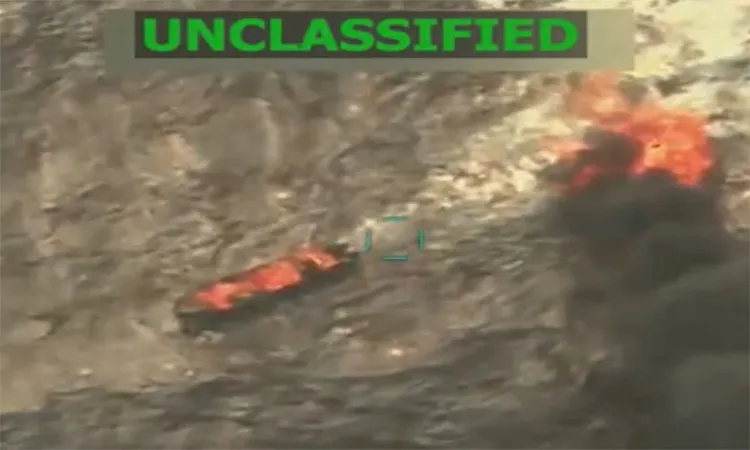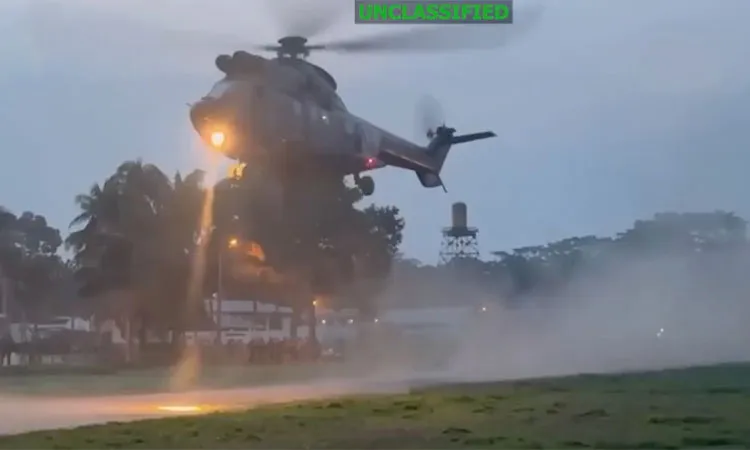
Ecuador and the US Southern Command have launched joint operations against designated criminal and terrorist-linked groups, the US military command said on Tuesday. The action is aimed at countering illicit drug trafficking, though operational details were not disclosed.
The announcement followed remarks by Ecuadorian President Daniel Noboa, who said the United States is among Ecuador’s “regional allies” participating in a new phase of the country’s fight against powerful drug cartels.
In a statement posted on X, US Southern Command said the “decisive action” targets narco-terrorist networks operating across the region. Ecuador’s defence ministry said details of the operations remain classified.
Noboa has warned that about 70 percent of the world’s cocaine now transits through Ecuador’s major ports, making the country a key hub for trafficking groups moving drugs to international markets. Much of the cocaine is produced in neighbouring Colombia and Peru, the world’s top two cocaine producers.
On Monday, Noboa met senior US military officials in Quito, including Southern Command chief Francis Donovan and Mark Schafer. The talks focused on intelligence sharing and closer coordination at airports and seaports, according to the president’s office.
Once among Latin America’s safest countries, Ecuador has seen a sharp rise in violence as rival gangs battle for control of trafficking routes. The drug trade has fuelled killings, prison unrest, and widespread insecurity.
Security cooperation between Ecuador and Washington has expanded since Noboa took office in 2023. However, efforts to reopen a permanent US military base were rejected after voters last year upheld a constitutional ban on foreign bases. Despite that, the US announced a temporary deployment of Air Force personnel to the former base in Manta in December.
US Southern Command said tackling drug trafficking remains a top priority. The administration of US President Donald Trump has intensified regional counter-narcotics operations, including maritime interdictions in the Caribbean and eastern Pacific.
Washington has also increased pressure on regional governments over drug flows. US authorities have accused Venezuela’s leader Nicolás Maduro of links to narcotics trafficking, allegations his government denies. Last month, Trump met Colombian President Gustavo Petro at the White House amid tensions over drug control efforts.