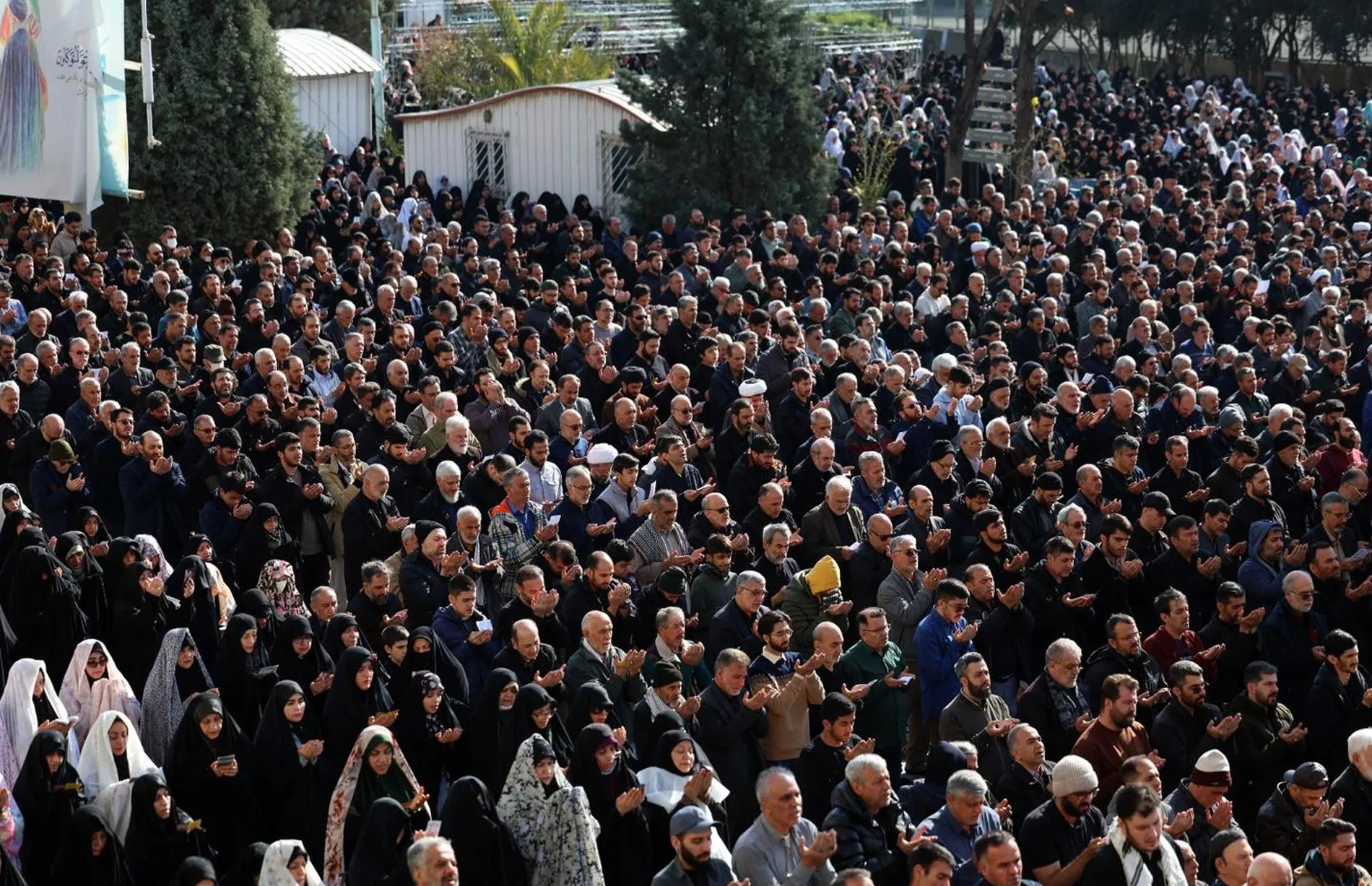
Eid-ul-Fitr prayers were held in Tehran amid heightened tensions following fresh airstrikes and a major attack on Iran’s key nuclear facility at Natanz.
A funeral was also held for Ali Mohammad Naini, who was reportedly killed in a joint US-Israel strike, as the ongoing conflict with Iran entered its fourth week.

Iran confirmed that its Natanz nuclear site, one of its most critical uranium enrichment facilities, was targeted on Saturday. The attack was attributed to the United States and Israel.
According to Iranian authorities and the International Atomic Energy Agency, no radioactive leakage or increase in radiation levels was detected following the strike. Officials said there was no immediate risk to nearby residents.
The Natanz facility, located about 220km southeast of Tehran, has previously been targeted, including during the 2025 Iran-Israel conflict. Satellite imagery had earlier shown damage to parts of the complex.

Russia strongly condemned the latest attack. Maria Zakharova called it a “blatant violation of international law” and urged an impartial international investigation. Moscow warned that such actions could trigger a wider regional crisis.
The IAEA chief Rafael Grossi reiterated calls for military restraint to avoid the risk of a nuclear accident. The agency said it is continuing to assess the situation.

Meanwhile, Israeli Defence Minister Israel Katz warned that military operations against Iran would intensify in the coming days, indicating further escalation.
Despite the tensions, large congregations gathered in Tehran for Eid prayers, reflecting a mix of religious observance and national resilience amid conflict.
The United States has maintained that its objective is to prevent Iran from acquiring nuclear weapons. Reports suggest Iran currently possesses significant quantities of enriched uranium, raising ongoing concerns among Western nations.
The situation remains volatile, with fears of further escalation across the Middle East.