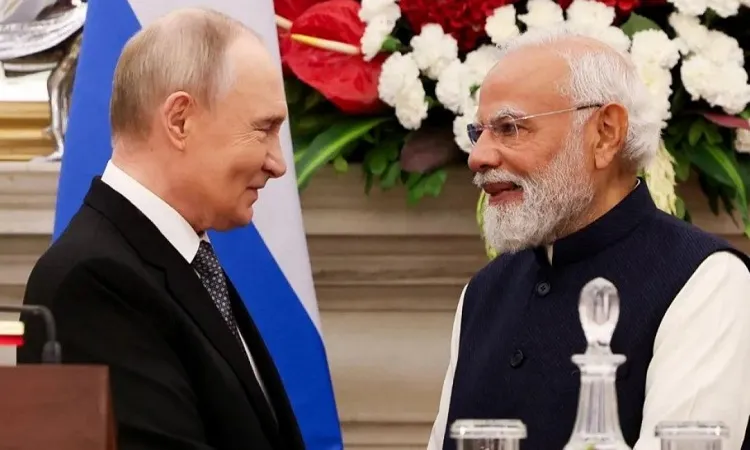
India and Russia have officially set an ambitious bilateral trade target of $100 billion by 2030, a move intended to propel their economic relationship to record heights over the next five years.
Indian Ambassador to Russia, Vinay Kumar, confirmed the historic milestone in an interview with PTI on Monday, January 26. The agreement follows high-level talks between Prime Minister Narendra Modi and President Vladimir Putin held late last year, signaling a "Special and Privileged Strategic Partnership." Bridging the Trade Deficit While bilateral trade hit a record $68.7 billion in the 2024-25 fiscal year, the current balance is heavily skewed toward Russia due to large-scale Indian imports of crude oil. To address this imbalance, the new agreement prioritizes: • Diversifying Exports: Boosting Indian shipments of pharmaceuticals, engineering goods, and agricultural products. • New Investment Corridors: Opening opportunities in technology, energy, and defense equipment. • Free Trade Agreement (FTA): Ongoing negotiations for a deal with the Eurasian Economic Union to streamline commerce. Ending Dollar Dependency A cornerstone of this roadmap is the continued use of national currencies—the Rupee and Ruble. By bypassing the Western dollar, both nations aim to minimize transaction risks and shield their trade from external geopolitical pressures.
"Achieving the $100 billion target by 2030 is eminently possible," Ambassador Kumar stated, noting that steps are already being taken to expand the "trade basket" beyond traditional sectors. Strategic and Diplomatic Outlook Beyond commerce, the deal includes a labor mobility pact to bring thousands of Indian workers to Russia to fill labor shortages in construction and engineering.
However, the partnership faces a delicate balancing act. India must manage this massive trade expansion within the framework of international regulations and the complex geopolitical landscape surrounding the conflict in Ukraine. Despite these challenges, experts view the $100 billion target as a definitive shift that will strengthen the strategic foundation between the two nations for decades to come.
Comment