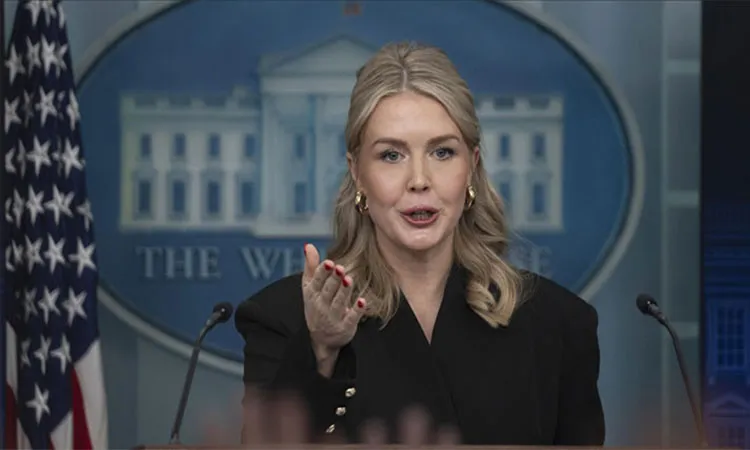
The White House confirmed Tuesday that acquiring Greenland is a "national security priority," stating that President Donald Trump is considering a "range of options" to secure the Arctic island, including the potential use of the U.S. military.
Escalating Tensions with NATO Allies The announcement has sparked a diplomatic crisis within NATO. Greenland is a semi-autonomous territory of Denmark, a key U.S. ally. Danish Prime Minister Mette Frederiksen warned that any U.S. aggression would signal the end of the alliance. In a rare show of unity, leaders from the UK, France, Germany, Italy, Poland, and Spain issued a joint statement backing Denmark’s sovereignty and the "inviolability of borders."

While Secretary of State Marco Rubio reportedly told lawmakers the administration prefers a purchase over an invasion, other officials have taken a harder line. Senior aide Stephen Miller stated that Greenland becoming part of the U.S. is "formal government policy," refusing to rule out the use of force.
Strategic and Economic Interests The U.S. interest in Greenland the world's largest island is driven by its strategic location in the Arctic and its vast untapped rare earth minerals. As melting ice opens new trade routes, both Russia and China have increased their activity in the region, a development the State Department calls a shared concern for NATO.

Local Opposition Despite the geopolitical maneuvering, Greenland’s 57,000 residents remain overwhelmingly opposed to U.S. annexation. Greenlandic Prime Minister Jens-Frederik Nielsen called for "respectful dialogue" rooted in international law, while local citizens expressed fear that the territory could face a fate similar to the recent U.S. intervention in Venezuela.