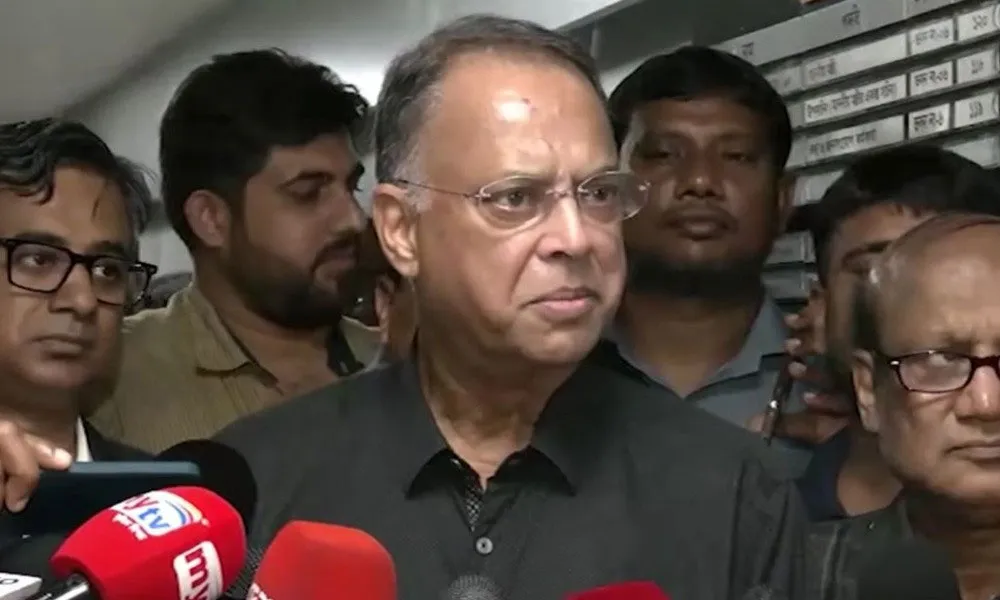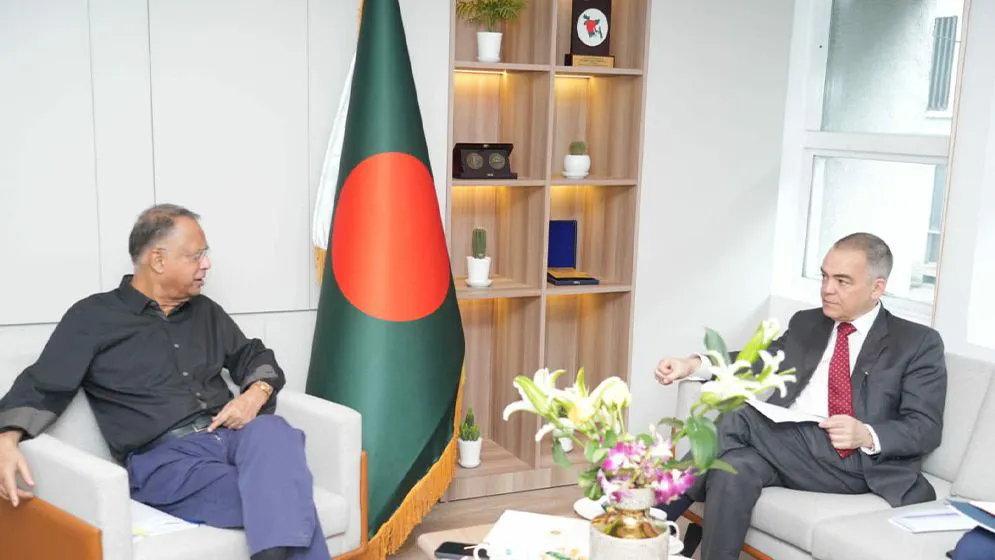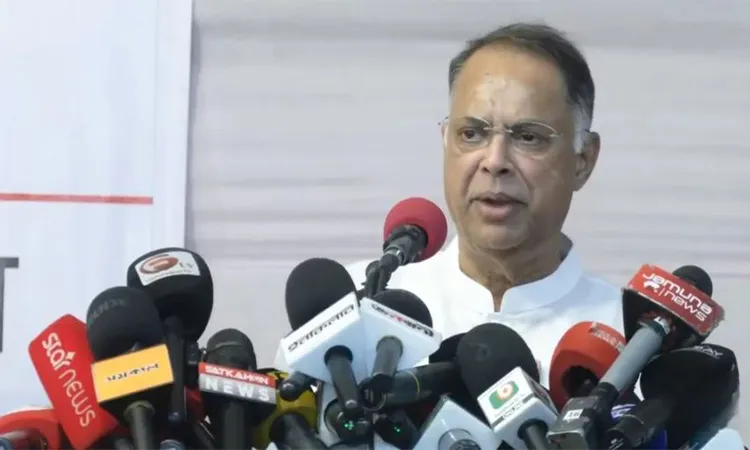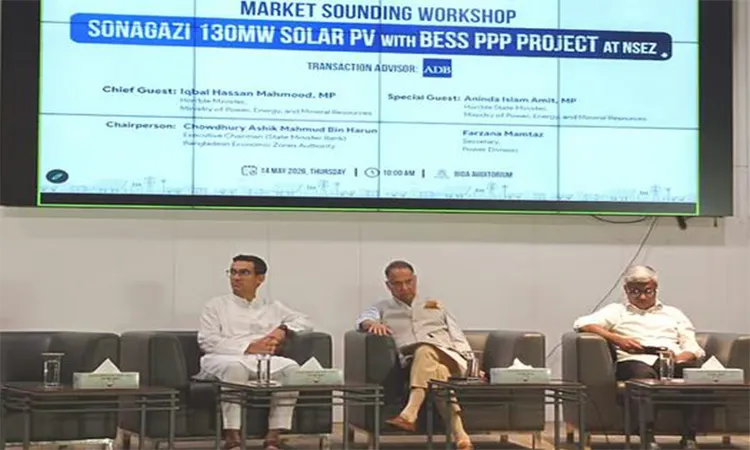
The government is considering a five-year tax holiday and reduced import duties to encourage investment in Bangladesh’s solar power sector, Power, Energy and Mineral Resources Adviser Iqbal Hasan Mahmud said on Thursday.
He also announced that investment-friendly policies for the renewable energy sector are expected by June next year.
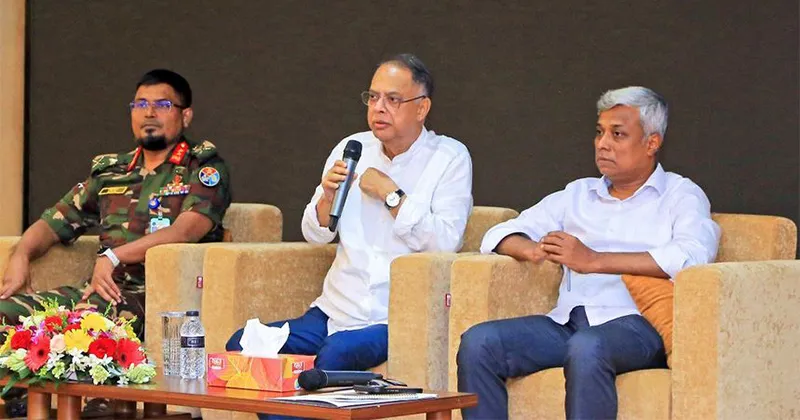
Speaking at a stakeholder workshop organized by the Bangladesh Economic Zones Authority (BEZA), Mahmud said rooftop solar projects in areas such as Dhanmondi and Mohammadpur could generate up to 1,000 megawatts of electricity if private investors are allowed to use available rooftops.
The workshop focused on the Sonagazi 130 MW Solar Power and Battery Energy Storage System (BESS) PPP project at the National Special Industrial Zone (NSEZ) in Mirsarai, Chattogram.
State Minister for Power and Energy Anindya Islam, BEZA Executive Chairman Ashiq Chowdhury and other officials attended the event.
Mahmud said the government is reviewing duty and tax exemptions on key solar components, including solar frames, photocells and batteries.
“Investment must come first for revenue generation later,” he said. “If investors receive minimum import duties and a five-year tax holiday, the sector will grow. After that, the government will naturally receive taxes.”
He also referred to Pakistan’s solar investment model, where the government imported solar equipment and provided incentives to investors. Bangladesh could adopt a similar approach by either importing equipment directly or allowing private companies to import at zero duty, he added.
Emphasizing the role of private investment, Mahmud said the government’s role should be to create a supportive environment rather than directly investing in projects.
“The government will ensure policy support and facilities. Investment should come from the private sector,” he said.
State Minister Anindya Islam said private sector participation is essential for Bangladesh’s renewable energy transition. He stressed the need for clear policies, easier financing documents, faster approvals and better coordination among agencies.
BEZA Executive Chairman Ashiq Chowdhury said the Sonagazi project is being implemented jointly by BEZA, the Power Division, UNDP and the Asian Development Bank (ADB).
He highlighted three key features of the project: