


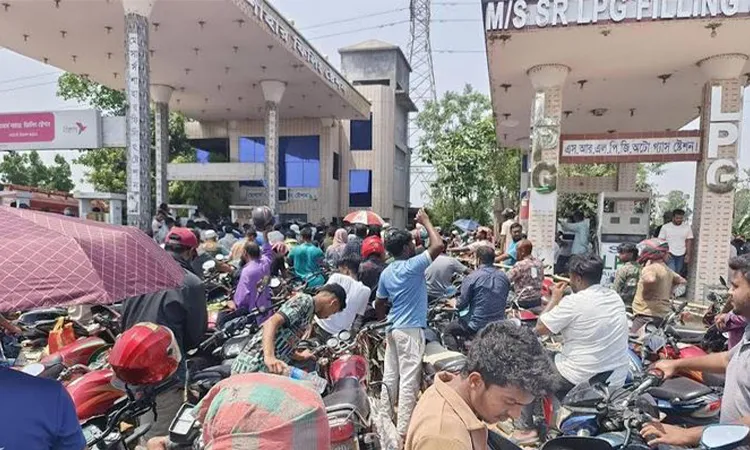
Despite government claims of adequate fuel reserves amid global market pressure, a severe fuel shortage has hit Bheramara upazila. Locals allege the crisis is being artificially created through irregular supply and syndicate-driven black market trading.
Five filling stations—MA Khalek, Matia, Mizan, Sahara and Dafadar—have been accused of not supplying fuel regularly. Pumps often remain closed for two to three days, then open briefly without notice. When one station operates, others remain shut, worsening public suffering.
Bheramara serves as a key hub for nearby Daulatpur and Mirpur upazilas, where motorcycles are the primary mode of transport. Thousands rely on daily fuel access. Now, residents report waiting 5–6 hours in intense heat to buy fuel worth Tk 200, with many returning empty-handed.
Meanwhile, fuel is reportedly being sold on the black market at Tk 250–300 per litre. Such sales have allegedly been observed in Rayata, Juniyadah, Bahadurpur, Golapnagar, Satbaria and Dharampur areas.
Locals suspect that fuel is being diverted from filling stations to informal markets for higher profits, creating an artificial shortage.
MR Kabir Hossain of Benham Pharmaceuticals said business operations are being disrupted due to fuel scarcity, with vehicles often left idle. Manjur Ahmed Bhutro, manager of Virgo Pharmaceuticals, said the crisis is affecting healthcare services, business, and daily life.
Upazila Executive Officer Rafiqul Islam said the administration is taking the matter seriously. However, no visible enforcement measures have yet eased public frustration.
Journalists and farmer representatives have urged the administration to ensure regular supply, launch mobile courts against black marketing, and enforce strict monitoring. They believe coordinated operation of all stations could reduce the crisis.
Filling station owners, however, claim they are receiving inadequate supply from government sources. They say normal service will resume once supply improves.
The situation in Bheramara now reflects possible regulatory gaps, weak monitoring, and alleged market manipulation. Without prompt intervention, residents fear further disruption to daily life.
