


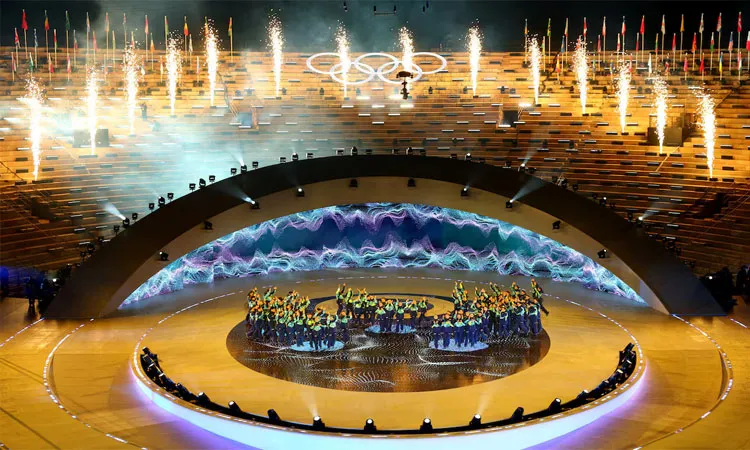
Italy on Sunday closed the Winter Olympics with a spectacular open-air ceremony at the ancient Verona Arena, marking the end of Games widely praised for smooth organisation and cultural flair.

The Olympics, co-hosted by Milan and Cortina d'Ampezzo, were spread across northern Italy and concluded without major disruption. Italy also enjoyed its most successful Winter Games, winning a record 30 medals.

The Olympic flag now passes to the French Alps, which will host the 2030 Winter Olympics using a similar multi-venue model aimed at reducing environmental impact.

“Grazie Italia per questi Giochi magici!” said International Olympic Committee President Kirsty Coventry. “You delivered a new kind of Winter Games and set a very high standard for the future.”
The closing ceremony, titled “Beauty in Action,” celebrated Italian culture with performances by renowned ballet dancer Roberto Bolle and music producer Gabry Ponte.

Italian Prime Minister Giorgia Meloni, who attended the ceremony, said the Games had brought “unforgettable emotions and lasting pride” to the nation.

Security was tight around the 2,000-year-old arena in central Verona, with access restricted to nearby areas. Earlier in the day, hundreds of protesters marched through the city against rising housing costs and environmental concerns linked to the Games. Demonstrators argued that some Olympic projects damaged fragile land and deepened social inequality.

Despite the protests, the mood inside the Arena was celebratory. Tickets ranged from 950 to 2,900 euros, though some seats remained empty on a cold but clear evening.

Verona Mayor Damiano Tommasi said hosting the ceremony at such a historic site was unprecedented in Olympic history and expressed hope that Italy could one day bid for another Summer Olympics. Rome last hosted the Games in 1960.
On the final day of competition, the United States defeated Canada 2–1 in overtime to win the men’s ice hockey gold medal.
While the Milan–Cortina Games ended on a festive note, experts say the model of widely spread venues may influence how future Olympics are planned, balancing global sport with environmental and social concerns.

