


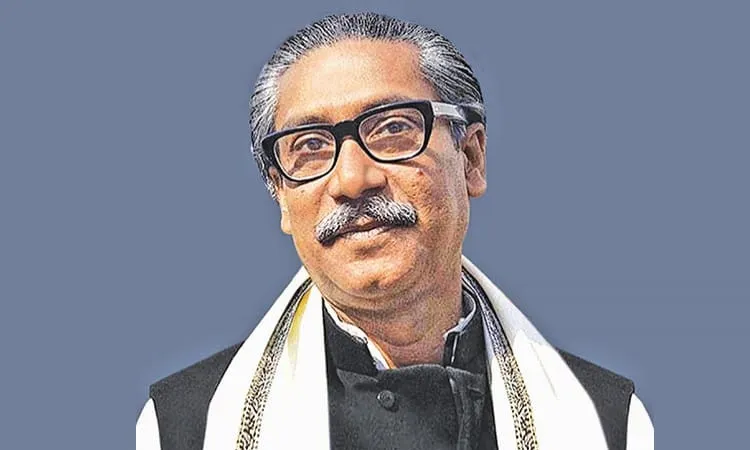
Today, Bangladesh commemorates the 107th birthday of Bangabandhu Sheikh Mujibur Rahman, the Father of the Nation. He was born on March 17, 1920, into a Sheikh family in Tungipara village of the then Gopalganj subdivision, Faridpur district.
Bangabandhu Sheikh Mujibur Rahman played a pivotal role in the 1952 Language Movement, the 1954 United Front elections, and the 1962 education movement. During British India and later in East Pakistan, he was active in politics and was imprisoned several times for his activism.
In 1966, he presented the historic six-point plan demanding greater autonomy for East Pakistan. In 1968, he was the main accused in the Agartala conspiracy case. On February 22, 1969, the Pakistani government withdrew the case and released him amid public protests. Following this, students and the public honored him with the title “Bangabandhu.”
His historic March 7, 1971, speech at Racecourse Maidan (now Suhrawardy Udyan) has been recognized by UNESCO as a world heritage document. After winning a majority in the 1970 Pakistan general election, he led the Non-Cooperation Movement starting in March 1971. On the night of March 25, 1971, he was arrested and taken to West Pakistan, where he remained in prison for nine months. He was released on January 10, 1972, and returned to Bangladesh.
Bangabandhu first served as President and later as Prime Minister of independent Bangladesh. He was assassinated at his Dhanmondi residence on August 15, 1975.
After the student-led coup on August 5, 2024, the interim government removed the state status and public holiday for his birthday, and National Children’s Day, observed since 2009, was also discontinued.
Bangabandhu Sheikh Mujibur Rahman remains a symbol of Bangladesh’s independence and political legacy.
