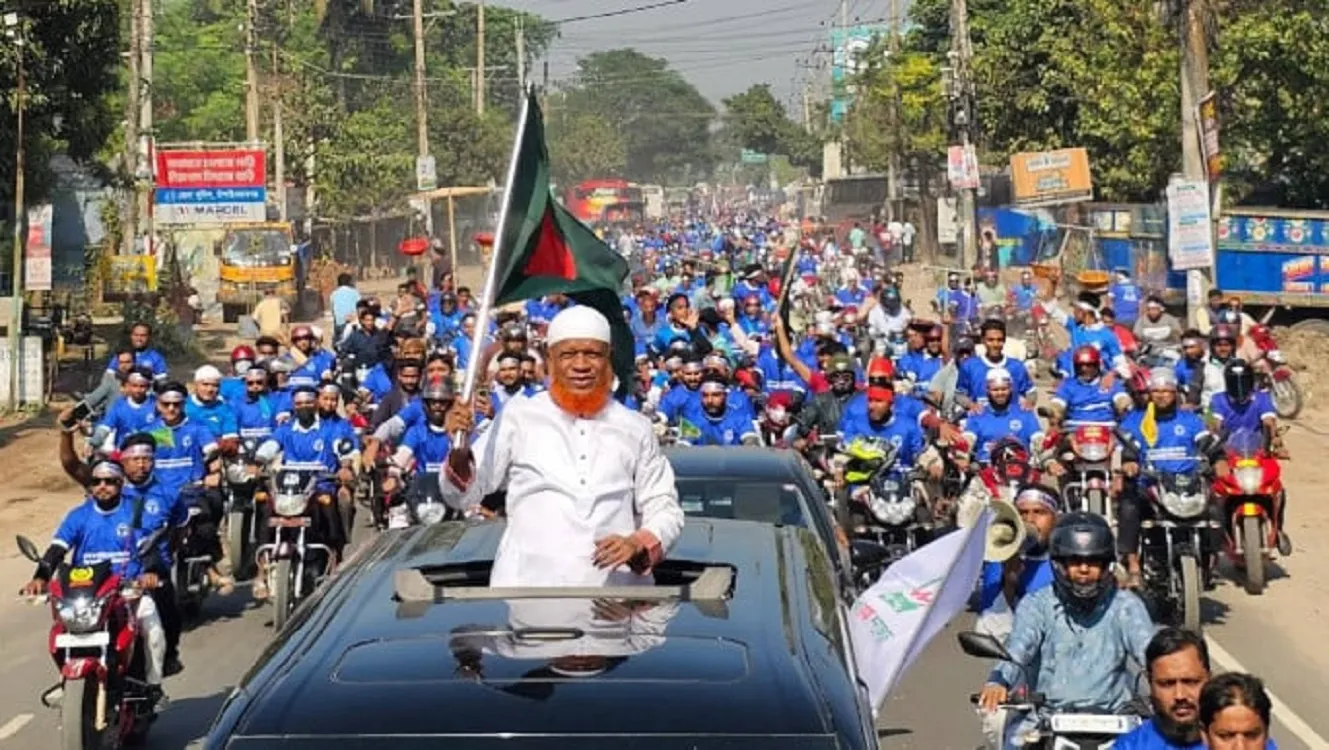
Political parties and potential candidates in Bangladesh are engaging in massive, unregulated spending likened to trading in futures long before the anticipated national election schedule is announced.
This surge in campaign activities, primarily motorcyle processions and widespread poster displays, is raising serious concerns among economists and analysts regarding the use of "black money" and its potential to commercialize politics.
Candidates from major contenders, including BNP, Jamaat-e-Islami, and others, are conducting large-scale "shows of strength" involving thousands of participants, car convoys, and widespread poster campaigns across constituencies.
Party leaders claim the funding for these activities (T-shirts, food, fuel) comes spontaneously from local well-wishers, unit-level leaders, and businessmen within the party, denying additional party costs. For instance, Jamaat reportedly spent Tk3 lakh on T-shirts alone for a single procession in Chapainawabganj. Current election expenditure rules cap spending at Tk25 lakh or Tk10 per voter (whichever is higher). However, this limit applies only after the formal election schedule is announced, leaving all pre-schedule spending unregulated and unaudited.
Political analysts and economists argue that the massive, pre-schedule spending is a clear manifestation of the use of unaccounted wealth ("black money").
Transparency International Bangladesh (TIB) Executive Director Iftekharuzzaman termed this expenditure an "investment for profit," suggesting candidates spend huge sums hoping to recoup them "several times over from public funds" after winning.
Democracy International’s Abdul Alim noted that this uncontrolled spending gives candidates with greater financial capability an unfair advantage, potentially influencing election outcomes, calling the practice "entirely unethical."
TIB research after the 12th National Election (2024) revealed that candidates spent an average of over six times the official limit (Tk1,56,83,777 average expenditure). Awami League candidates, in particular, spent an average of 11.45 times the limit.
Election Commissioner Md Anwarul Islam Sarker stated that the Election Commission's (EC) responsibility for enforcement begins only when the schedule is announced. He argued it is difficult to determine the source of money being spent prematurely and suggested that monitoring pre-schedule activities is currently the government's responsibility.
Former EC Secretariat officials and TIB called for reforms, including bringing pre-election activities under the Code of Conduct and making candidates' expense accounts mandatory for public disclosure to enforce greater accountability.
Comment