Rain drifted across Bangladesh in pauses and bursts as the country entered Eid-ul-Azha on Thursday. The Muslim festival of sacrifice arrived this year beneath heavy skies and heavier public emotions.
In the dim hours before the festival, cattle markets churned through thick mud, highways groaned under the pressure of millions heading home and families prepared for prayers, slaughter, and reunion. Yet alongside the familiar rituals, the nation is visibly weighed down by economic strain, grief and public anger over a series of recent national tragedies.
Prayers Amid Political and Economic Transition
At the center of Eid-ul-Azha remains the core philosophy of sacrifice—the surrender of greed, vanity and selfishness. Worshippers across the country gathered for early morning Eid prayers before offering sacrificial animals and distributing meat among relatives, neighbors and the less fortunate.
Dhaka’s National Eidgah was prepared for the main congregation. President Mohammed Shahabuddin, Prime Minister Tarique Rahman, cabinet members, Supreme Court judges and citizens from all walks of life stood shoulder to shoulder in prayer. In separate messages, both the President and the Prime Minister urged the public to share the joy of Eid with poor and marginalized communities.
However, this year’s festival arrives at a tense political crossroads. The BNP-led government has just crossed its first 100 days in office and is working to consolidate control ahead of tabling the national budget for the 2025–26 fiscal year immediately after the holidays. Meanwhile, opposition from Jamaat-e-Islami and its ally, the National Citizen Party (NCP), is mounting both in parliament and on the streets. The Awami League, ousted during the 2024 mass uprising, remains entirely absent from public politics. Its chief, Sheikh Hasina, continues her exile in India following a death sentence delivered in absentia, while many senior leaders remain underground.
Compounding the political tension, the domestic economy continues to strain under severe inflation and global uncertainty. Rising oil prices driven by West Asian conflicts have pushed up domestic transport and commodity costs. Despite government claims of economic stabilization, everyday households report that tangible relief has yet to reach them.
Livestock Markets Battle Rain and Tight Budgets
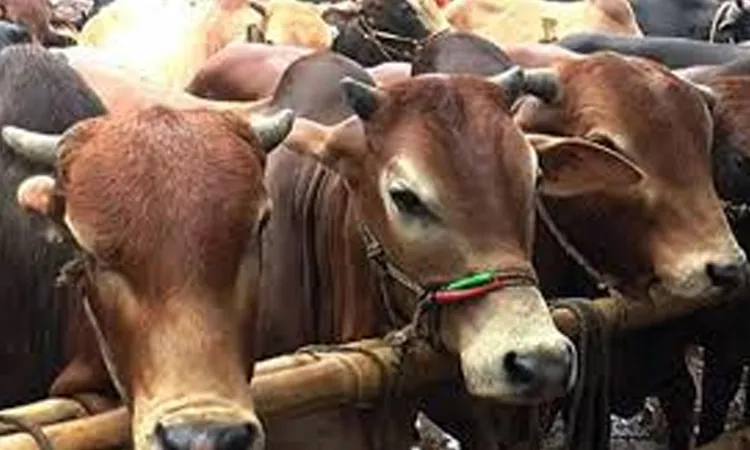
The financial squeeze was highly visible in cattle markets nationwide. Buyers struggled to reconcile shrinking household budgets with soaring livestock prices, while traders complained of low profit margins. Despite the crunch, the deeply rooted tradition retained its pull.
Market Trends: Middle-income buyers gravitated toward small cattle priced around Tk 55,000. Wealthier customers spent between Tk 400,000 and Tk 500,000 on premium animals. Traders noted that medium-sized cattle, ranging from Tk 100,000 to Tk 150,000, dominated the overall demand.
Weather Disruptions: Heavy downpours complicated the trade, turning makeshift market grounds into muddy swamps, forcing sellers onto roadsides, and leaving buyers to navigate waterlogged lanes under umbrellas.
The markets also produced their usual viral sensations. An albino buffalo from Narayanganj, dubbed "Donald Trump" by social media users due to its white coat and golden hair, became an internet phenomenon before being moved under state protection to the National Zoo.
A Country Carrying Deep Grief
This festive season is profoundly overshadowed by public grief and systemic failures. Gaps in vaccination coverage during the recent transitional administration have led to a worrying rise in child deaths from measles. Public outrage also remains high over the recent rape and murder of eight-year-old Ramisa Akter in Dhaka’s Pallabi, sparking fresh demands for swift judicial action against crimes targeting children.
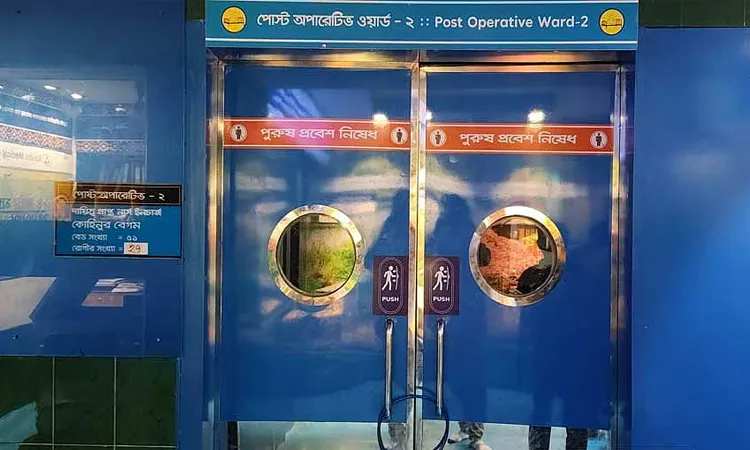
Most devastatingly, just hours before Eid, six newborns died in the post-operative ward of Ad-din Medical College Hospital in Moghbazar. The tragedy has triggered nationwide fury and multiple official investigations into suspected ventilation failures or technical faults, leaving the affected families to face the holidays in unimaginable sorrow.
Mass Exodus and Highway Hazards
To ease holiday travel, the government extended the break into a rare seven-day stretch by canceling a previous weekly holiday, closing offices from May 25 to May 31. The Bangladesh Passenger Welfare Association estimated that between 10 million and 11.5 million people left Dhaka, resulting in one of the largest population movements of the year.
The mass exodus was marred by severe gridlocks along the Dhaka-Tangail-Jamuna Bridge Highway and dangerous travel practices. Disregarding official warnings, many commuters resorted to traveling in open pickup vans and cargo trucks. This risk turned fatal on Sunday night when a rod-laden truck carrying holiday travelers crashed in Tangail, killing 15 people—10 of whom hailed from Naogaon.
Home Minister Salahuddin Ahmed described the accident as "deeply tragic," but maintained that overall accident numbers are lower than in previous years. He added: "If passengers themselves remain aware and avoid hazardous transport, such tragedies can be avoided."
Fighting the Risk of "Rivers of Blood"
The Bangladesh Meteorological Department (BMD) has warned that heavy to very heavy rainfall will likely persist through Saturday across Dhaka, Rajshahi, Khulna, Mymensingh and Sylhet divisions.
Morning and afternoon rains risk disrupting animal slaughter and meat processing while severely testing city drainage systems. In past years, heavy rains during Eid-ul-Azha famously submerged areas like Shantinagar in floodwaters mixed with animal blood, generating widely criticized images of urban mismanagement.
Dhaka’s city corporations are deployed heavily to prevent a repeat of those scenes:
Dhaka South City Corporation (DSCC): Deploying 13,500 sanitation workers to clear an estimated 34,000 tonnes of waste over three days.
Dhaka North City Corporation (DNCC): Mobilizing 16,000 cleaners backed by more than 750 waste-removal vehicles.
Authorities have distributed millions of polythene bags, disinfectants, and bleaching powder, issuing strict warnings to residents not to dump animal waste into storm drains to avoid catastrophic waterlogging.
As dawn prayers conclude under rain-heavy skies, Bangladesh enters this Eid-ul-Azha balancing deep spiritual devotion with acute national unease—a resilient population celebrating its most sacred rituals while carrying the quiet weight of recent loss and economic survival.