


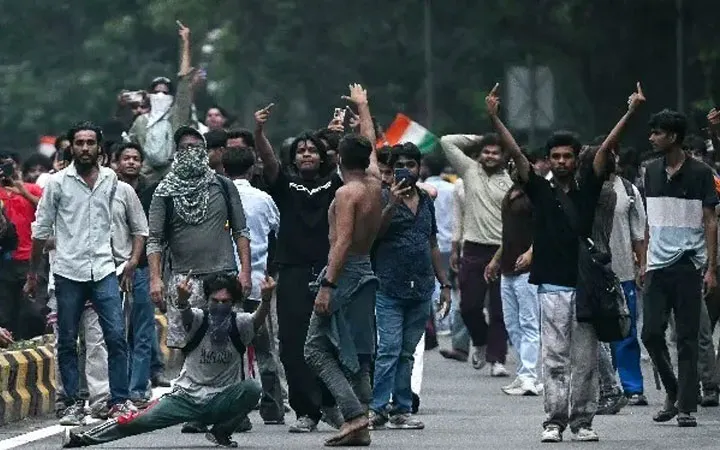
What began as a satirical social media campaign has evolved into one of India's most closely watched anti-government protest movements. The student-led Cockroach Janata Party (CJP) has expanded demonstrations from New Delhi's Jantar Mantar to areas surrounding Parliament, drawing support from opposition parties and intensifying political pressure on Prime Minister Narendra Modi's government.
Initially sparked by allegations of examination paper leaks, irregularities in the education system and demands for the resignation of Education Minister Dharmendra Pradhan, the movement has broadened into a wider campaign focused on transparency, youth unemployment and government accountability.
From Exam Paper Leaks to a Nationwide Protest
The protests began at Jantar Mantar in New Delhi before spreading across several Indian states. The movement gained further momentum after Sonam Wangchuk, an engineer and education activist from Ladakh, joined the campaign with a hunger strike demanding reforms.
Authorities later transferred Wangchuk to a hospital following concerns about his health. Protest organizers alleged he was removed against his will, while Delhi Police said the decision was taken solely for medical reasons.
March Toward Parliament
Following Wangchuk's hospitalization, organizers announced a "March to Parliament" campaign.
Thousands of students, job seekers and supporters marched toward Parliament despite heavy security, road barricades and temporary internet restrictions in parts of the capital.
Clashes broke out between protesters and police as demonstrators attempted to advance toward restricted areas. Police used batons and tear gas to disperse crowds.
According to official figures, 118 police officers were injured, while approximately 70 protesters were detained.
Police alleged that demonstrators breached security barriers and damaged public property. Protest organizers, however, accused security forces of using excessive force and claimed several students were injured during the confrontation.
Opposition Parties Rally Behind Protesters
The movement has received growing support from India's opposition.
Opposition leader Rahul Gandhi condemned the police response, saying competitive examinations represent one of the few remaining opportunities for young people seeking employment and that repeated paper leaks have undermined public confidence in the education system.
Samajwadi Party leader Akhilesh Yadav also criticized police conduct, alleging that officers in plain clothes assaulted demonstrators.
Former Delhi Chief Minister Arvind Kejriwal, national convenor of the Aam Aadmi Party (AAP), accused the central government of attempting to intimidate protesters. He urged authorities to respect citizens' democratic rights.
Government Holds First Talks
After nearly three weeks of demonstrations, the central government held its first formal meeting with CJP representatives.
Union Minister J.P. Nadda met protest leaders, but organizers said the government offered no commitment to accept their key demands.
Meanwhile, Parliamentary Affairs Minister Kiren Rijiju said authorities had already taken action over the examination paper leak allegations, including the arrest of 13 suspects, and pledged stronger measures to prevent similar incidents.
Protest Reaches Prime Minister's Residence
On Tuesday, Rahul Gandhi, joined by Congress leader Priyanka Gandhi Vadra and other senior party members, staged a sit-in outside Prime Minister Narendra Modi's official residence at 7 Lok Kalyan Marg.
The demonstrators demanded the resignation of both Prime Minister Modi and Home Minister Amit Shah, arguing that the government should be held politically accountable for its handling of the crisis.
The government dispatched Union Minister Jitendra Singh to speak with the protesters as security around the prime minister's residence was tightened.
In a post on X, Gandhi said the protest was intended to seek accountability for what he described as the mistreatment of students during the previous day's demonstrations.
Origins of the CJP
The Cockroach Janata Party (CJP) was founded by Abhijit Dipke, a 30-year-old graduate who returned to India after studying in the United States. What began as an online satirical initiative reportedly grew rapidly through its website and social media platforms, with organizers claiming millions of followers.
What's Next?
Protest organizers say they will continue demonstrations until authorities ensure greater transparency in the examination system, prosecute those responsible for paper leaks and address broader concerns over education governance.
Political analysts say the movement has expanded beyond education reform into a broader expression of public frustration over employment opportunities, governance and accountability. Whether it evolves into a lasting political challenge for the Modi government remains uncertain.
