Iran’s Islamic Revolutionary Guard Corps (IRGC) announced Tuesday that its Aerospace Force carried out a series of missile and drone strikes against U.S. military assets and infrastructure in Bahrain, Kuwait and Jordan. Among its claims IRGC stated it launched cruise missiles at Amazon’s central data infrastructure in Bahrain as part of the 24th wave of its "Operation Nasr 2."
According to Iranian state-linked media IRGC claimed the strike on the American tech giant's facility was destroyed in direct retaliation for a recent U.S. airstrike on Iran’s under-construction Darkhovin nuclear power plant. Iranian authorities called the Darkhovin site a civilian and IAEA-safeguarded facility.
Neither Bahrain U.S. officials nor Amazon have independently verified the claim regarding the data center. However Bahrain’s military reported intercepting several incoming projectiles over its territory.
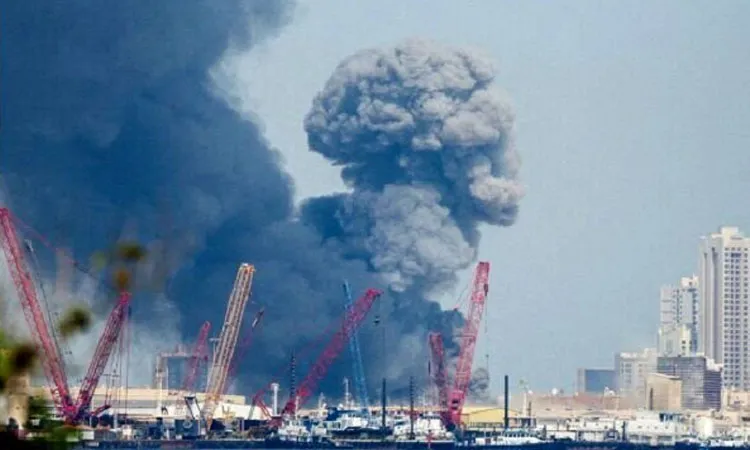
The reported strike on corporate technology infrastructure marks a significant expansion in the scope of regional retaliatory actions. Beyond the tech facility IRGC claimed its forces targeted U.S. air defense installations, telecommunications centers, long-range radars and an MQ-9 drone hangar across Bahrain and Kuwait. Attacks were also reported against U.S. personnel accommodation at Bahrain’s Sheikh Isa Air Base and military sites in Jordan.
Concurrently, regional stability faces growing strain:
Kuwait Infrastructure: Kuwait’s Ministry of Electricity and Water reported strikes on power generation and water desalination plants for a fourth consecutive day, forcing emergency teams to extinguish fires and take several generating units offline.
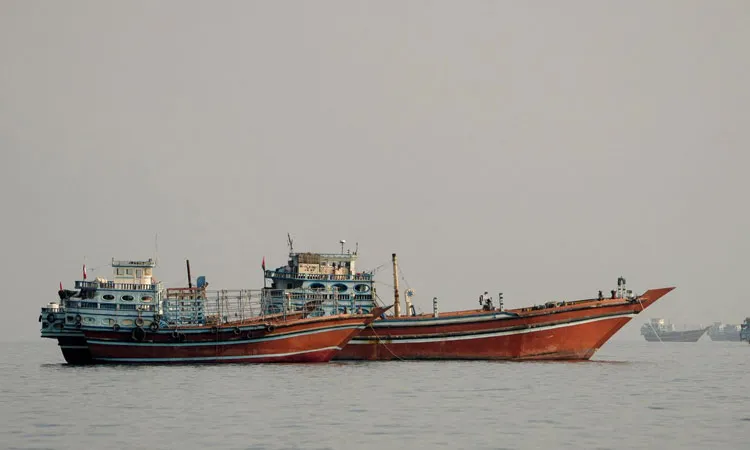
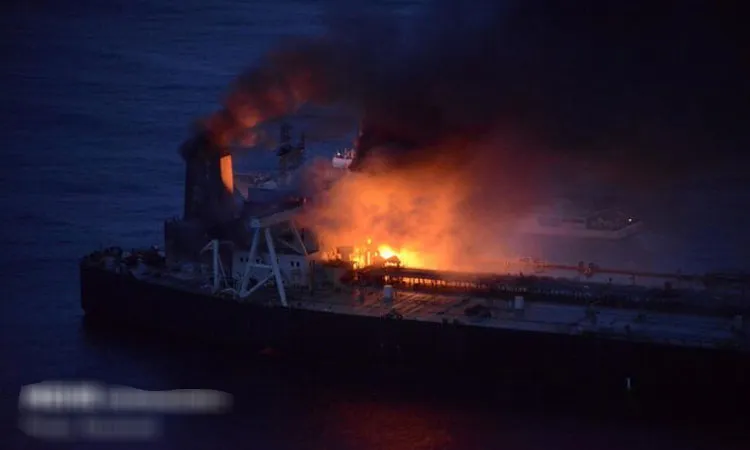
Maritime Disruptions: Reports emerged of an unidentified projectile hitting a commercial vessel in the Strait of Hormuz, forcing the crew to abandon ship. The IRGC separately claimed two oil tankers caught fire following explosions along the southern maritime route.
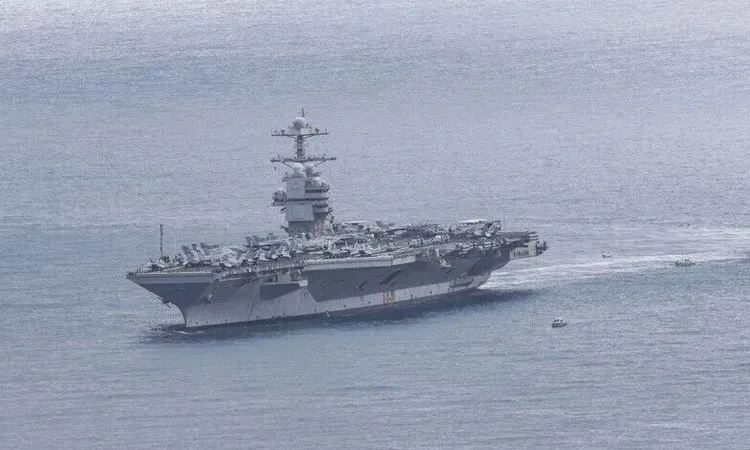
The violent exchanges follow U.S. strikes overnight targeting Iranian command centers, missile sites and naval capabilities in southern cities, including Shiraz, Konarak and Chabahar. U.S. President Donald Trump warned on social media that Tehran would pay "many times over" for the recent deaths of American service members killed in Jordan and Iraq.
Despite the intensifying cycle of attacks which threatens a Pakistan-brokered memorandum of understanding signed in June diplomatic communications remain active. White House officials noted that efforts to negotiate a potential temporary ceasefire and address maritime security in the Strait of Hormuz are continuing alongside military responses.