Global oil prices dipped on Tuesday as energy markets weighed potential US sanctions relief on Russian energy against ongoing supply risks driven by escalations in the Middle East.
Brent crude futures fell 49 cents or 0.45 percent to $109.06 per barrel, after scaling a five-month high of $110.70 in the previous session. US West Texas Intermediate (WTI) crude for November delivery eased 0.33 percent to $103.32 a barrel, while the more active December contract slid 46 cents or 0.47 percent to $98.08.
Market sentiment was influenced by an executive order issued by US President Donald Trump over the weekend that waived key Russia-related sanctions and tariffs including penalties for purchasing Russian oil and gas. However, Trump later clarified that a final decision has not been announced while US Secretary of State Marco Rubio noted that officials require additional time to evaluate the policy. According to the International Energy Agency (IEA), Russian crude production rose by 65,000 barrels per day (bpd) in September to 8.43 million bpd though it remains nearly 870,000 bpd lower than last year's levels.
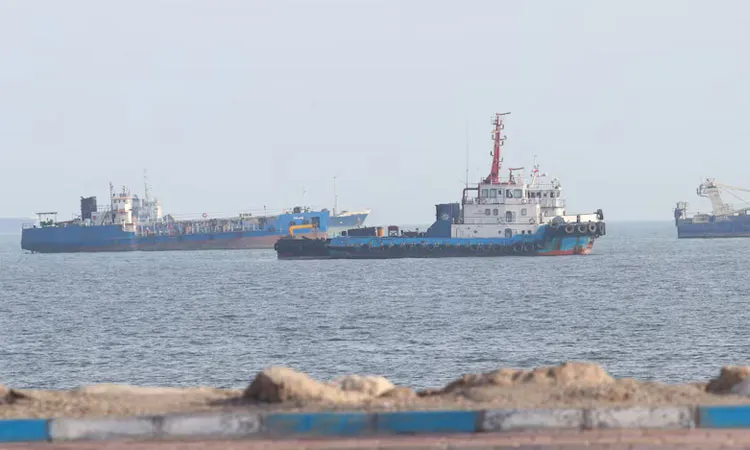
Despite potential supply relief from Russia, oil prices remained anchored above $100 per barrel due to persistent security threats in the Middle East. Yemen’s Iran-aligned Houthi movement claimed responsibility for launching attacks targeting Saudi energy infrastructure and airports including an Aramco facility in Yanbu and the Shaybah oilfield. Saudi authorities did not immediately confirm the claims.
Simultaneously, a Houthi missile strike on a military training camp in Yemen's Shabwa province killed at least 58 people and injured more than 200 also raising widespread concerns over further regional instability and potential disruptions to global oil transit routes.
Meanwhile, preliminary market surveys in the United States indicate expected declines in crude oil and refined product stockpiles, offering underlying support to prices.