As Bangladesh Open University (BOU) celebrates its 34th anniversary, the occasion offers an opportunity to reflect on its achievements and reaffirm its commitment to expanding educational opportunities for all. Established on 21 October 1992, BOU has emerged as a pioneering institution that brings learning beyond conventional classrooms, geographical boundaries, and socio-economic barriers. Its journey reflects the national aspiration to build an educated, skilled, inclusive and knowledge-based society. In a densely populated country marked by geographical diversity and socio-economic inequality, conventional institutions alone cannot meet every learner’s needs.
The foundations of distance education in Bangladesh were laid through the School Broadcasting Pilot Project in 1978, the National Institute of Educational Media and Technology in 1983 and the Bangladesh Institute of Distance Education in 1985. These initiatives culminated in the establishment of BOU at the initiative of the then Prime Minister, Begum Khaleda Zia.
BOU’s founding philosophy is “Education for All,” supported by lifelong and employment-oriented learning. It reflects the principle that education should not be restricted by age, occupation, social class or geographical location. The university seeks to serve people who face social, economic or geographical barriers or who cannot pursue studies through conventional institutions. By using information and communication technologies to overcome constraints of time, place and cost, BOU aims to widen access for disadvantaged communities, develop employment-related knowledge and skills, connect education with professional life and foster an inclusive, skilled, self-reliant society.

Over more than three decades, BOU has established a distinctive place in Bangladesh’s higher-education landscape. It began academic activities with the Bachelor of Education (B.Ed.) programme under the School of Education and has since expanded its academic provision and infrastructure. The university now comprises seven schools: School of Education, School of Social Sciences, Humanities and Languages; Open School, School of Science and Technology, School of Business, School of Agriculture and Rural Development and School of Law. Its programmes range from Secondary School Certificate (SSC) and Higher Secondary Certificate (HSC) courses to bachelor’s and honours degrees, postgraduate programmes, MPhil and PhD degrees and professional diplomas and certificates. According to available statistics, more than 300,000 students are enrolled in 55 academic programmes delivered through open and distance learning (ODL) and blended learning across the country, including remote and underserved areas. Further programmes are being developed to respond to emerging educational and professional needs.
BOU has made notable progress in infrastructure development and administrative decentralisation. Alongside its main campus in Gazipur, it operates 12 regional centres, 63 sub-regional centres, and approximately 1,500 study centres nationwide. This network helps bring education to learners in areas poorly served by conventional institutions. The university has developed mechanisms for preparing learning materials, producing printed and electronic resources, creating audio-visual content through its in-house Media Centre, conducting tutorials and examinations, and providing student services. Its reach also extends beyond Bangladesh with academic activities serving expatriate Bangladeshi communities in South Korea, Italy, Saudi Arabia and four other Middle Eastern countries.
The incorporation of the Institute of Technical and Vocational Education and Training (ITVET) into BOU’s academic framework is an important step towards workforce development. Technical and vocational education and training (TVET) develops practical competencies, technological proficiency and problem-solving skills. When aligned with industry and labour-market needs, it can expand employment and self-employment opportunities, improve productivity and help address the skills demands of the Fourth Industrial Revolution. Through ITVET, BOU seeks to strengthen skills development and workforce preparation. The initiative will also provide opportunities to learn a third language in keeping with an important dimension of government education policy.
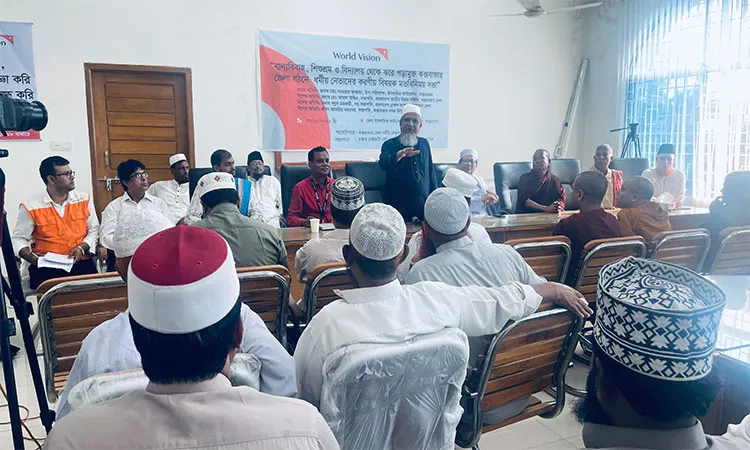
BOU is preparing to introduce SSC and HSC programmes under the “Niche-3” programme to help bring students from Qawmi madrasas into closer engagement with mainstream education. Curricula and syllabuses have been developed with assistance from educationists and subject specialists, taking account of learners’ particular needs and circumstances. The planned January 2027 launch is expected to create additional pathways for educational advancement and broader social and economic participation.
Research and knowledge creation are fundamental
responsibilities of a university. BOU has established laboratories to support research in agriculture, science and technology and has partnered with domestic and international universities and research institutions to promote academic exchange and collaboration. A memorandum of understanding with the Institute of Biotechnology, a prominent research institution under the Ministry of Science and Technology is expected to create further opportunities for joint research and knowledge sharing. Measures have also been undertaken to regularise the publication of a DOI-bearing central journal and of journals associated with the university’s seven schools. Efforts to broaden the Centre for Research on Liberation War's activities will further support research into the history, experiences and legacy of Bangladesh’s Liberation War.
The digital transformation of Bangladesh Open University is now an imperative of the times. In response to the Fourth Industrial Revolution, advances in artificial intelligence and the rapidly evolving demands of the labour market also the university must integrate its academic and administrative activities within a comprehensive digital framework. Online admission and registration, digital learning resources, electronic attendance, examination and results management, grievance redress mechanisms and administrative automation can enhance the efficiency, transparency and accountability of institutional operations while improving the quality of student services. With these objectives in view, BOU has undertaken initiatives to align its future priorities with emerging technological and educational developments
Curricula must also be modernised to align with labour market requirements and national development priorities. Wider adoption of outcome-based education, practical skills development, short-term courses, micro-credentials and reskilling opportunities can help learners respond to changing professional demands. Flexible learning arrangements are particularly important for women, persons with disabilities, marginalised communities, and working learners. An integrated digital learning environment should combine mobile applications, e-learning platforms and cloud-based portals with printed materials. Teachers need training in digital pedagogy and the effective use of educational technologies. Regional, sub-regional and study centres should gradually become high-speed internet-enabled Smart Learning Hubs, providing accessible, technology-supported learning opportunities throughout the country.
Research, innovation and international collaboration must remain integral to the university’s long-term development. Stronger partnerships with domestic and international universities and research institutions can facilitate joint academic programmes, collaborative research and the exchange of knowledge and educational resources. At the same time, the wider adoption of electronic file management and comprehensive administrative automation will strengthen institutional efficiency, transparency, and accountability. Together, these measures can establish a more responsive, technology-enabled and student-centred university capable of addressing emerging educational and professional challenges.
The thirty-fourth anniversary of Bangladesh Open University provides an opportunity to reflect on its achievements and renew its commitment to the future. Building on its founding philosophy of education for all, equality of opportunity and lifelong learning, BOU must continue to expand access to education while ensuring academic quality, research excellence, technological innovation and the holistic development of learners. Its future success will depend on its ability to integrate inclusive educational opportunities with relevant curricula, practical skills, effective governance and responsive student services. With a clear strategic vision and sustained institutional commitment, Bangladesh Open University can strengthen its position as a leading national institution for open and distance learning and advance towards international standards of academic excellence. Its success will ultimately be measured not merely by the number of learners it reaches but by the quality of education it delivers, the knowledge it generates, the skills it develops and its lasting impact on individuals, communities and the nation. Keeping this reality in mind, the future vision for BOU must be formulated.
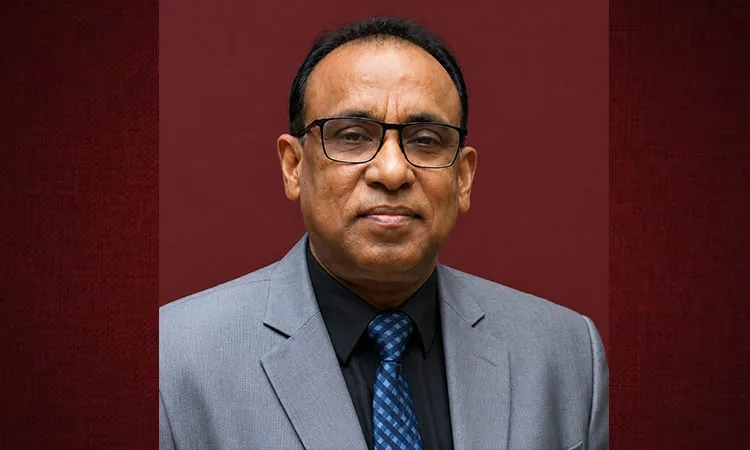
Author: Professor Dr. Mohammad Siddiqur Rahman Khan, Vice-Chancellor, Bangladesh Open University, email: srkhan@bou.ac.bd