For decades the flying cars belonged strictly to science fiction. Now the two major tech players are bringing them closer to reality though their designs work in completely different ways.
California startup Alef Aeronautics recently threw some friendly shade at Tesla on social media, posting a video showing its flying prototype soaring above a Tesla Roadster. Welcoming Elon Musk’s company to the "flying car race" Alef CEO Jim Dukhovny joked that his team had been flying solo for 11 years.

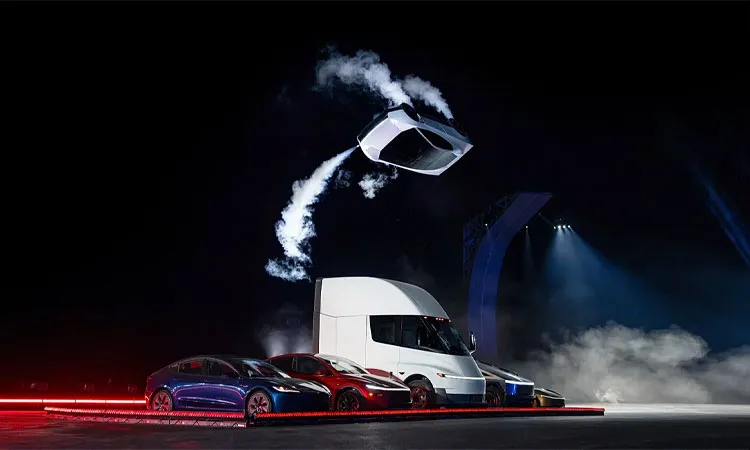
The poke came after Tesla showed off its upcoming Roadster doing crazy aerial stunts including brief lift-offs and mid-air flips, using cold-gas thrusters. But while both vehicles can leave the ground, they aren't offering the same thing.
How Do They Actually Compare?
Alef’s Model A: This is a true dual-mode vehicle built to handle both highway driving and actual forward flight. It uses eight electric propellers to launch vertically like a drone, then turns its body sideways to fly up to 110 miles through the air. It drives at modest street speeds with a 200-mile road range. Alef secured a special airworthiness certificate from the US Federal Aviation Administration (FAA) back in 2023 and is hand-building early testing units priced around $300,000.

Tesla Roadster: Rather than a full-fledged aircraft the Tesla’s Roadster remains a high-performance electric supercar. It packs compressed-air thrusters that blast out short bursts of thrust. This allows for quick hops, flips and insane speed boosts but not sustained cruising through the sky. Tesla is targeting production by 2028.
Alef wants to build a practical vehicle that doubles as an airplane, while Tesla is using rocket-style tech to push the boundaries of supercar driving.
Either way the everyday commuters shouldn't trade in their street cars just yet. Major hurdles with strict safety regulations, air traffic control rules, high costs and public acceptance mean everyday flying cars are still several years off.