
- National
- Bangladesh
- Business
- International
- Sports
- Entertainment
- Politics
- Technology
- Life Style
- Religion
- Opinion
- FIFA World Cup 2026
Sunday, 19 July 2026

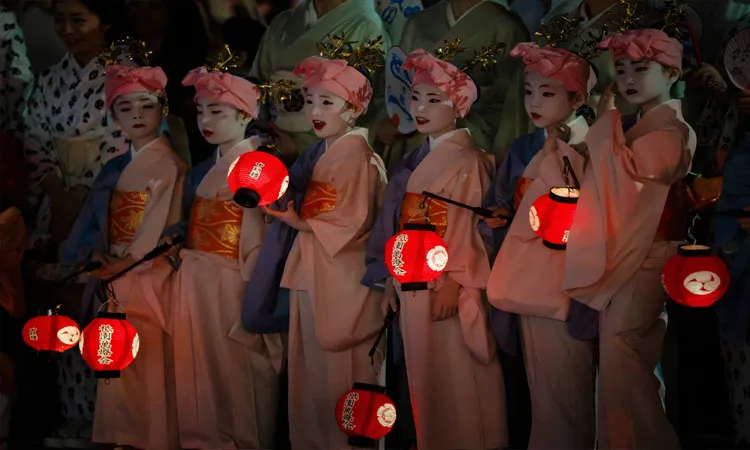
The historic streets of Kyoto came alive on Friday as thousands gathered for the annual Gion Matsuri one of Japan's three most famous festivals. Featuring a spectacular procession of 23 towering yamahoko floats centuries-old Shinto tradition seamlessly blends ancient spirituality with vibrant community celebration.
The festival originated in the late 9th century during the Heian period as a sacred ritual to appease angry spirits and protect the city from devastating epidemics.

Today the event remains deeply rooted in the worship of kami (deities) and traditional rituals of protection rather than mere public entertainment.

"I always carry out my work with great care and respect, feeling the presence of the gods," said Atsushi Matono, who is responsible for erecting the shingi a sacred tree placed atop a float where a deity is believed to descend.

The highlight of Friday’s procession began at 9:00 AM, led by the prominent Naginatahoko float. A chosen young boy is serving as a sacred divine messenger whose feet are never allowed to touch the ground performed the ritual cutting of the shimenawa rope to initiate the parade.

Spectators cheered as the massive floats some weighing up to 12 tons navigated the dramatic tsuji-mawashi turn at a major central intersection to the rhythmic sounds of traditional konchiki-chin music.

While the Gion Matsuri is now recognized as a premier Shinto celebration centered around Kyoto's Yasaka Shrine experts note that its history reflects centuries of complex religious evolution. Until the government forced the separation of Shinto and Buddhism in 1868 during the Meiji era, the site operated as a Buddhist temple dedicated to Gozu Tennō an ox-headed deity believed to control diseases.

For locals and international tourists alike the grand spectacle offers a profound look into preserved heritage. The celebrations will continue through July 24 concluding with the Ato Matsuri procession featuring 11 additional traditional floats.

